
 Česky
 Deutsch
 Italiano
 Polski
 Français
 Srpski
Industrial robot programming and robotic workstations
We write the code that sets your production in motion
We program industrial robots for new operations and modify the cycles of existing workstations. Describe the robot type, the tool or gripper, the part and the required result. If the cycle connects to a PLC or another station, also state how the part is transferred and the required cycle time.
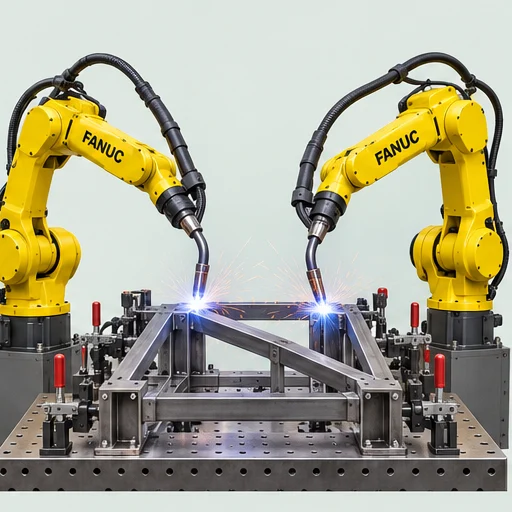
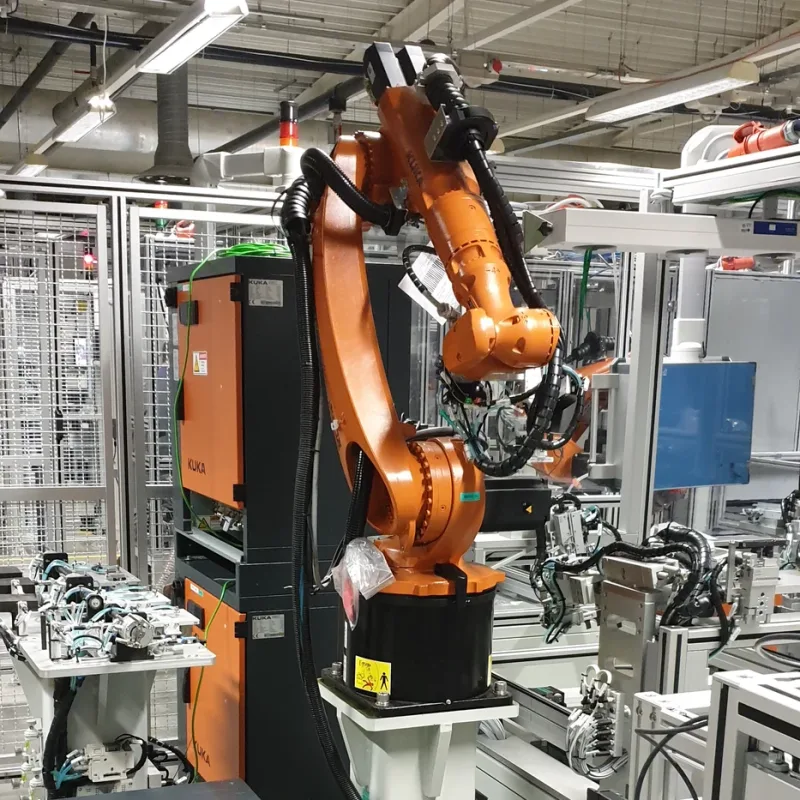
Production robotisation and robotic workstation modifications
Robotic handling covers gripping, moving and transferring a part in line with the work cycle. A new product on an existing robotic workstation may require a change to the robot program as well as a modification of the gripper, tool or fixture. State the robot model, how the part is loaded and the requirements for the new cycle. Based on the available documentation, we assess the interface with the PLC, signal exchange and test conditions.
For a new workstation, describe the operation and the equipment you already have. For an existing cell, show the current cycle and the change you need to make.
The entire work sequence is important for the assessment: loading the part, robot movement, tool operation and transfer to the next operation. A video of the current cycle will also help show waiting for other equipment or the operator.
Robot programming for specific production operations
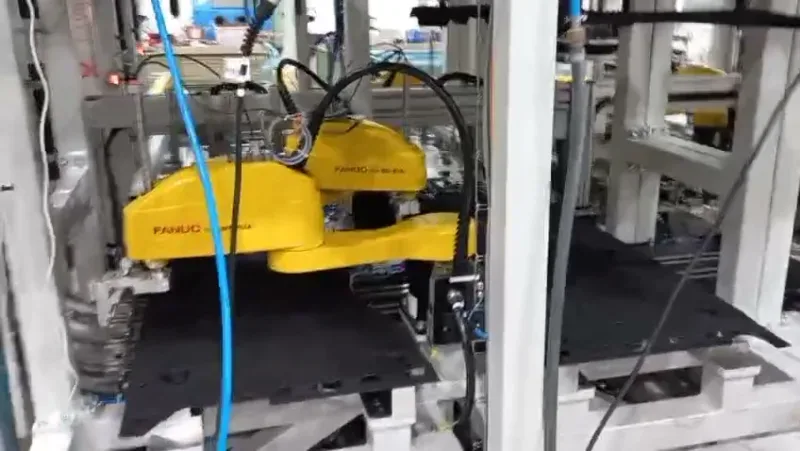
Program and work movements
Preparing or modifying paths according to the position of the part, the tool and the available space. When changing an existing application, we define what must be retained.
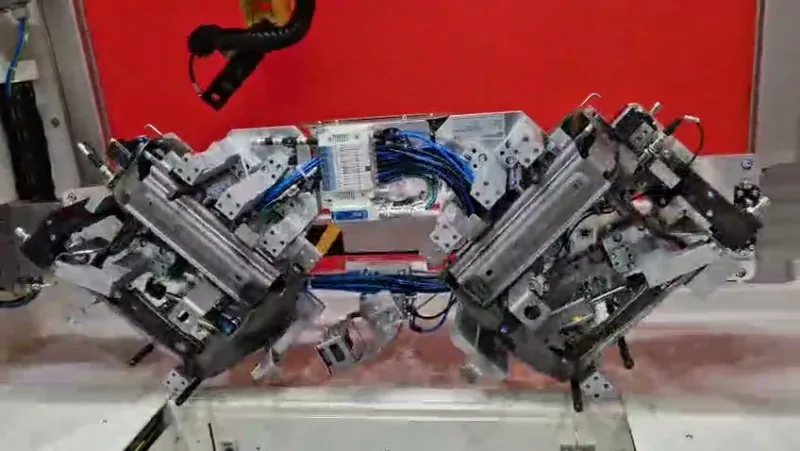
Tool and part loading
Conditions for tool readiness, product loading and operation completion. The supply or modification of the tool and fixture is defined separately within the scope of the order.
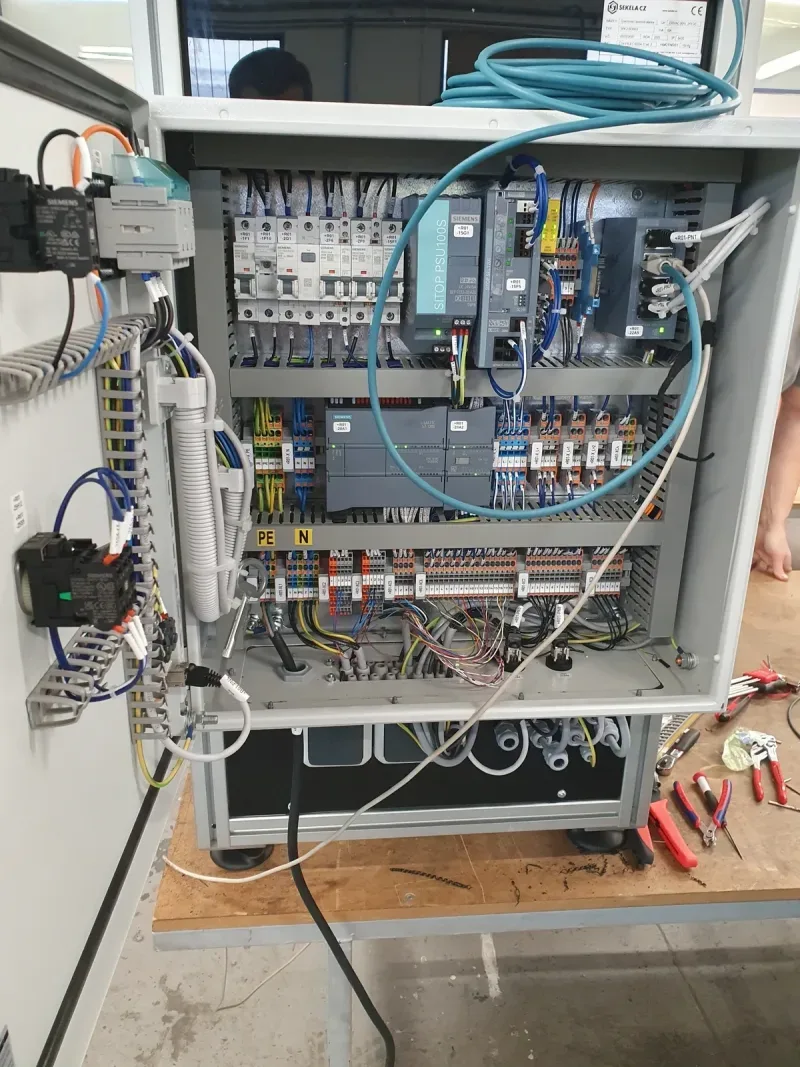
Control of the entire workstation
Interfaces between the robot, the PLC and other equipment. We agree on the transfer of states and the connection to loading, unloading and operator work.
Welding cells and robotic inspection stations
In the design, we address the robot's movement together with the tool, part loading and communication with the surrounding technology.
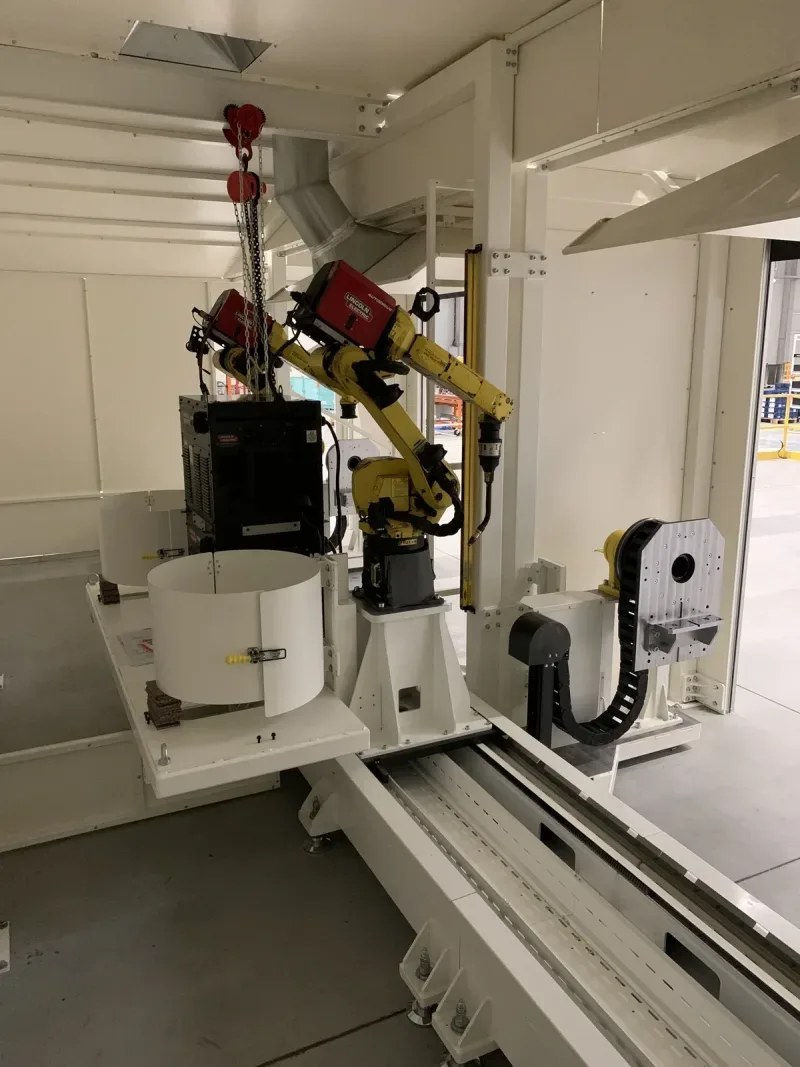
Welding cells with one or more robots
We choose the number of robots and the cell layout according to access to the welds, the loading method and the required cycle time. Depending on the brief, we handle fixtures, programming and coordinating the robots with other movements in the cell.
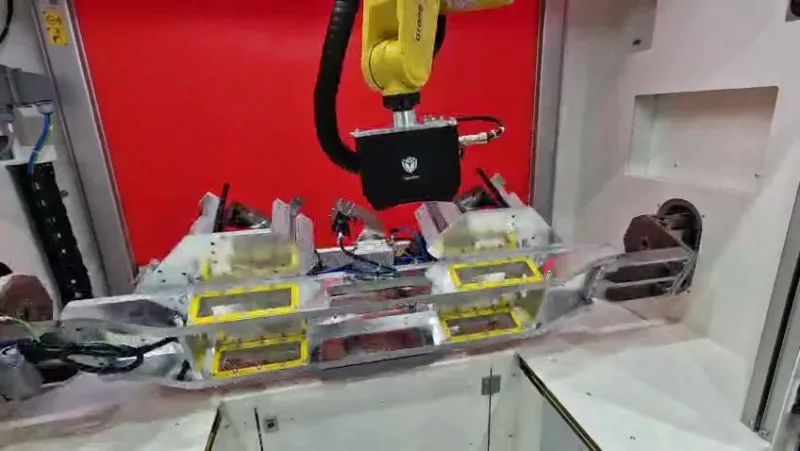
3D scanners, industrial cameras and sensors
A robot can bring a camera or 3D scanner to several points on the part, or move the part in front of a fixed sensor. Depending on the brief, we verify, for example, presence, orientation or dimensions. The inputs for the design are the inspection characteristics, tolerances, samples and the time available for inspection.
Modifications of robotic welding cells from other suppliers
For a customer from the automotive industry, we are modifying existing robotic welding cells from the original supplier DEL a.s.
Do you need to modify a welding cell in your plant? For an initial assessment, the robot and cell type, a description of the required change, the availability of a program backup and the date when the workstation can be shut down will help us.
Robotic workstations from our projects
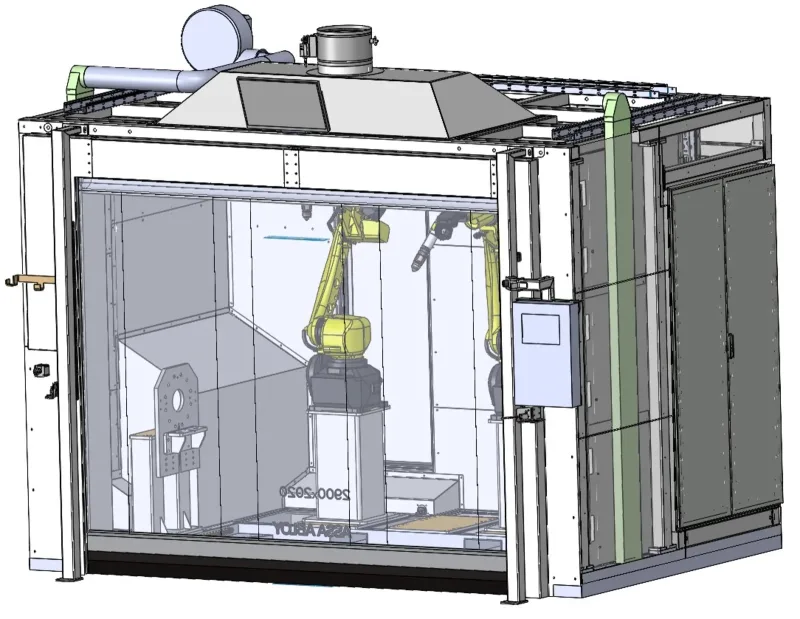
Robotic cell for plasma cutting
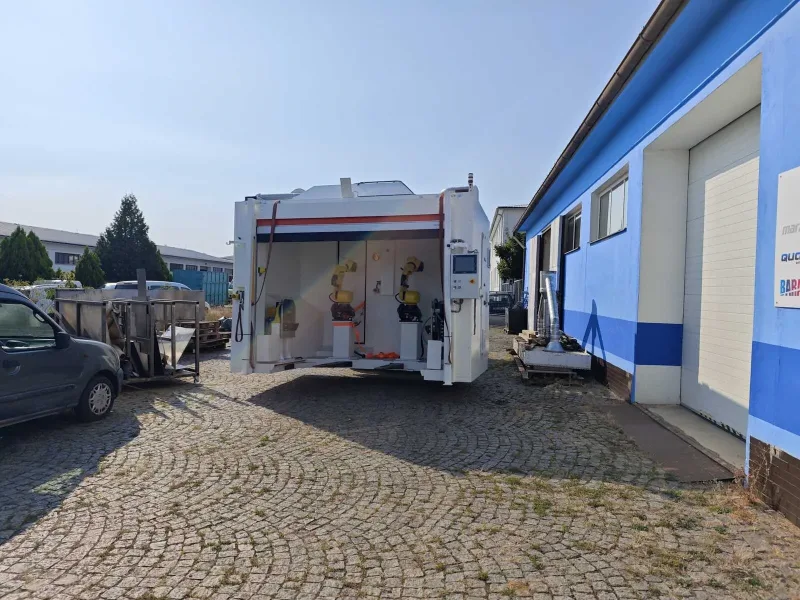
Two FANUC robots plasma-cut bumper reinforcements. The project includes the design, the mechanical and electrical parts and installation of the workstation.
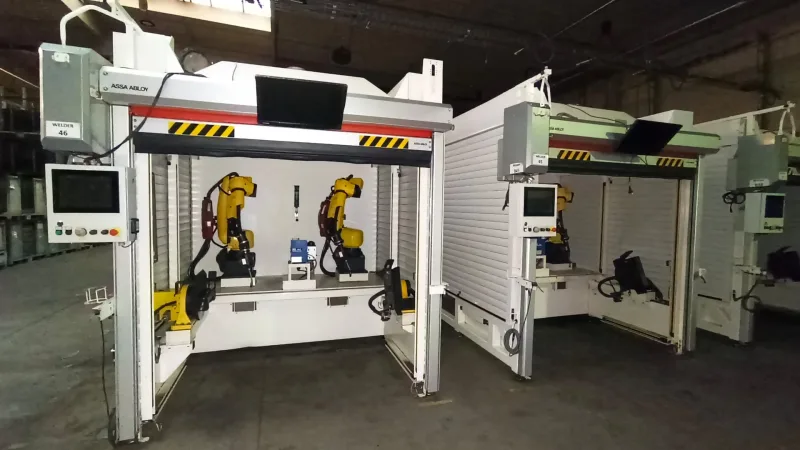
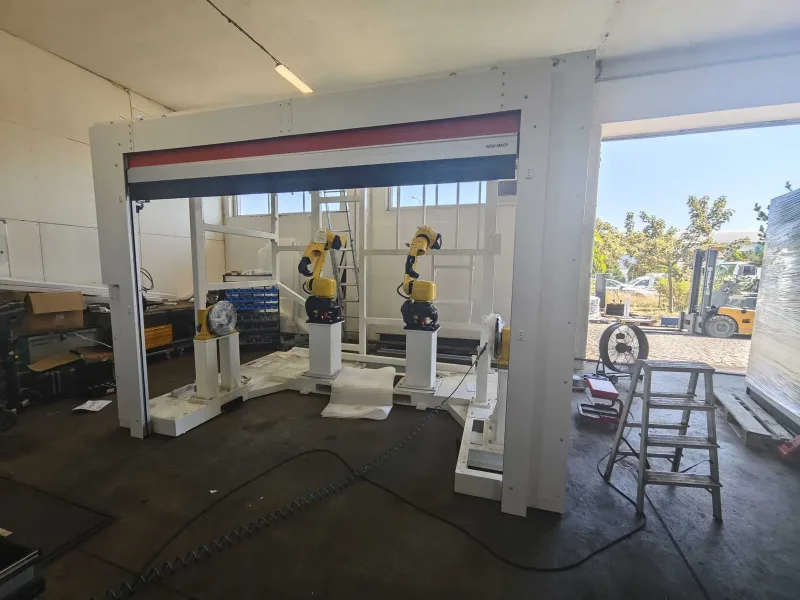
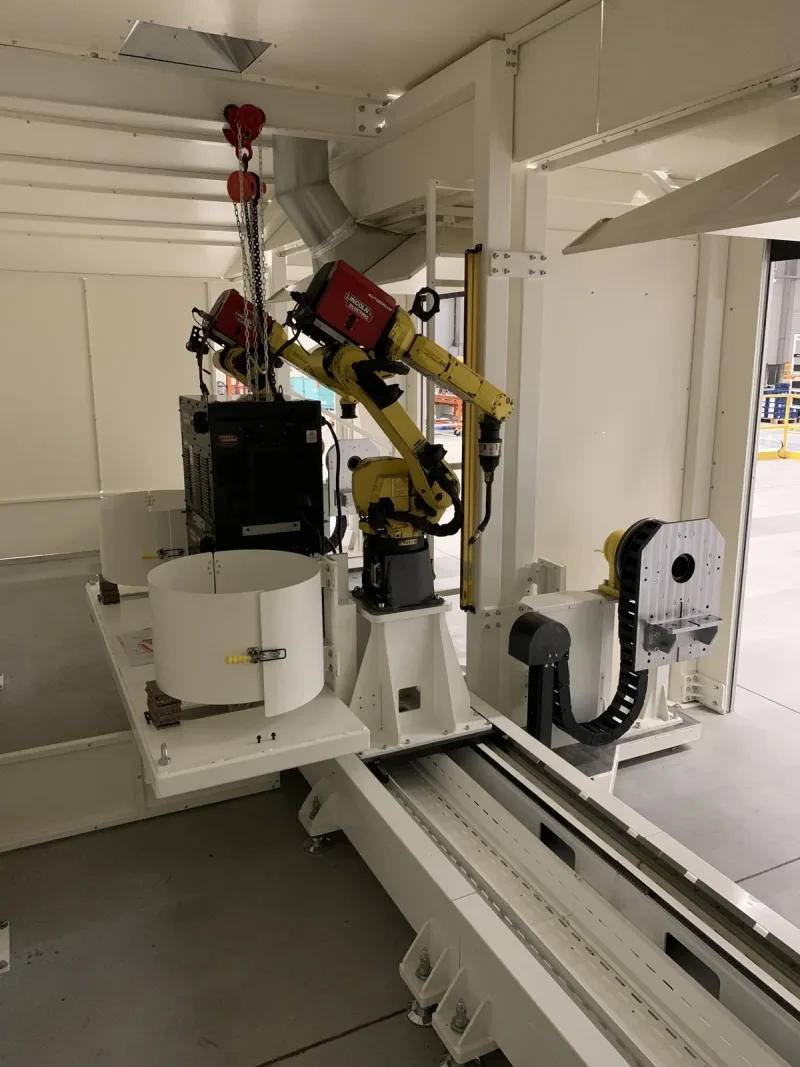
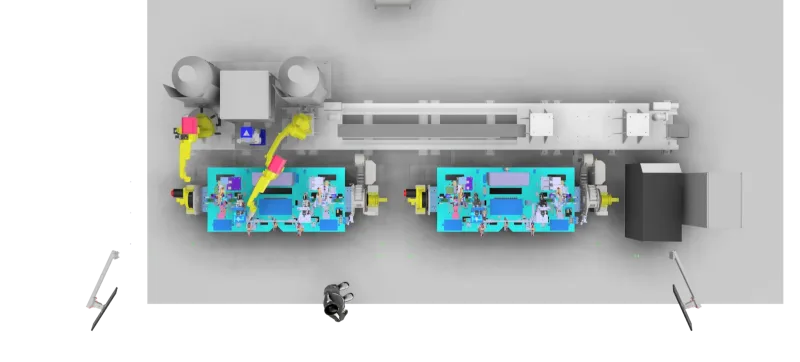
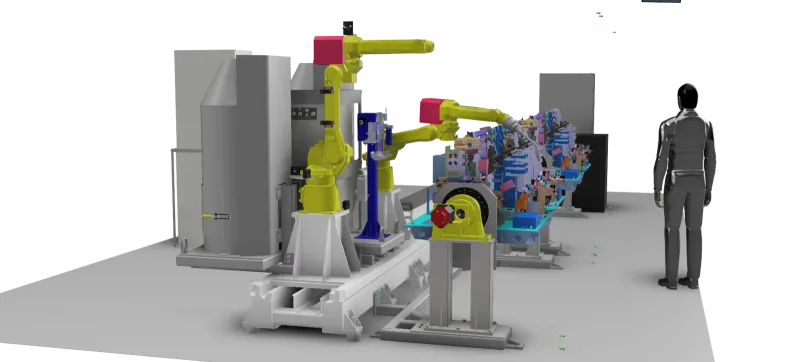
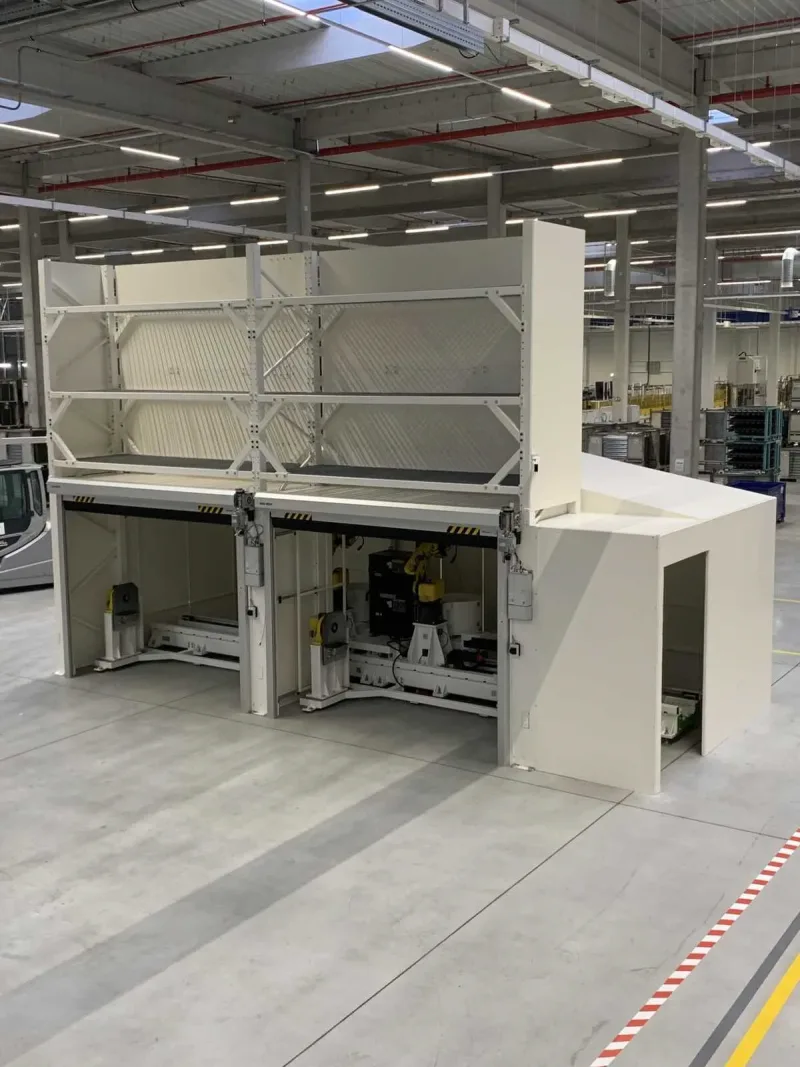
Two-robot welding station
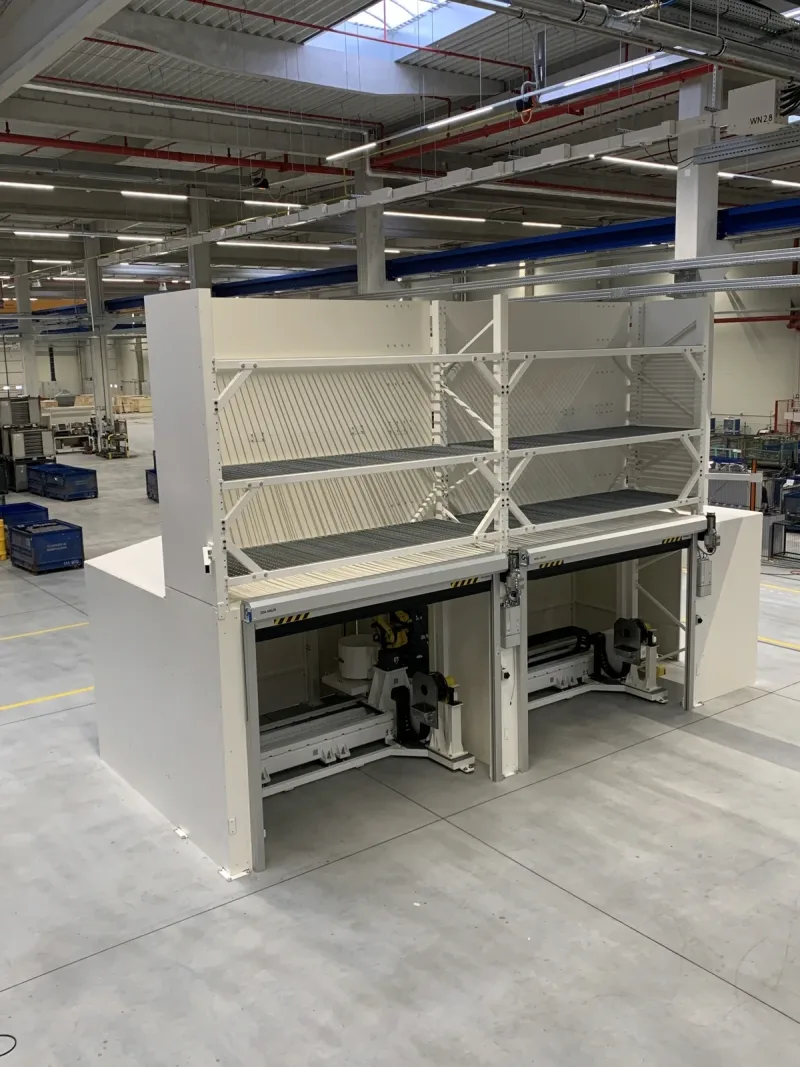
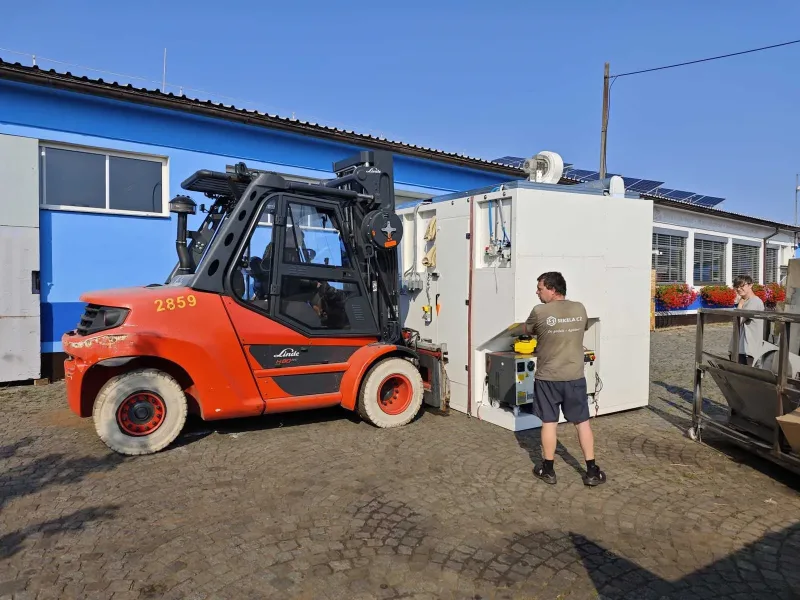
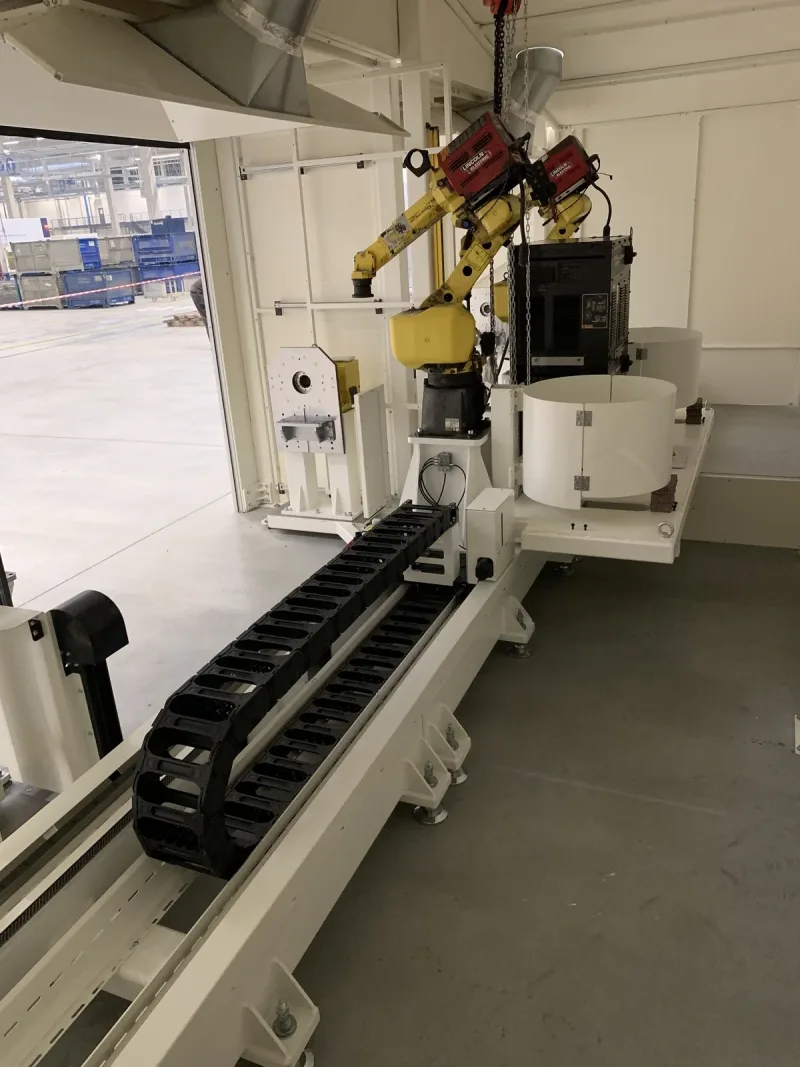
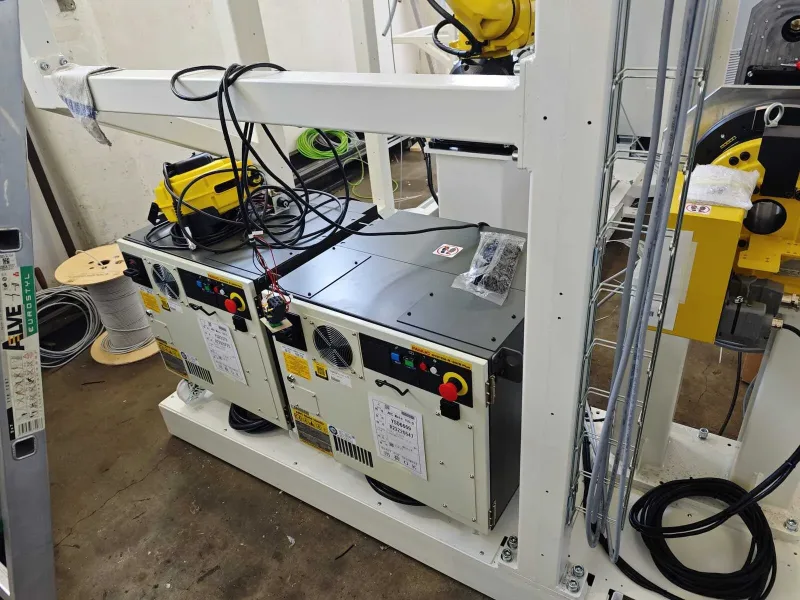
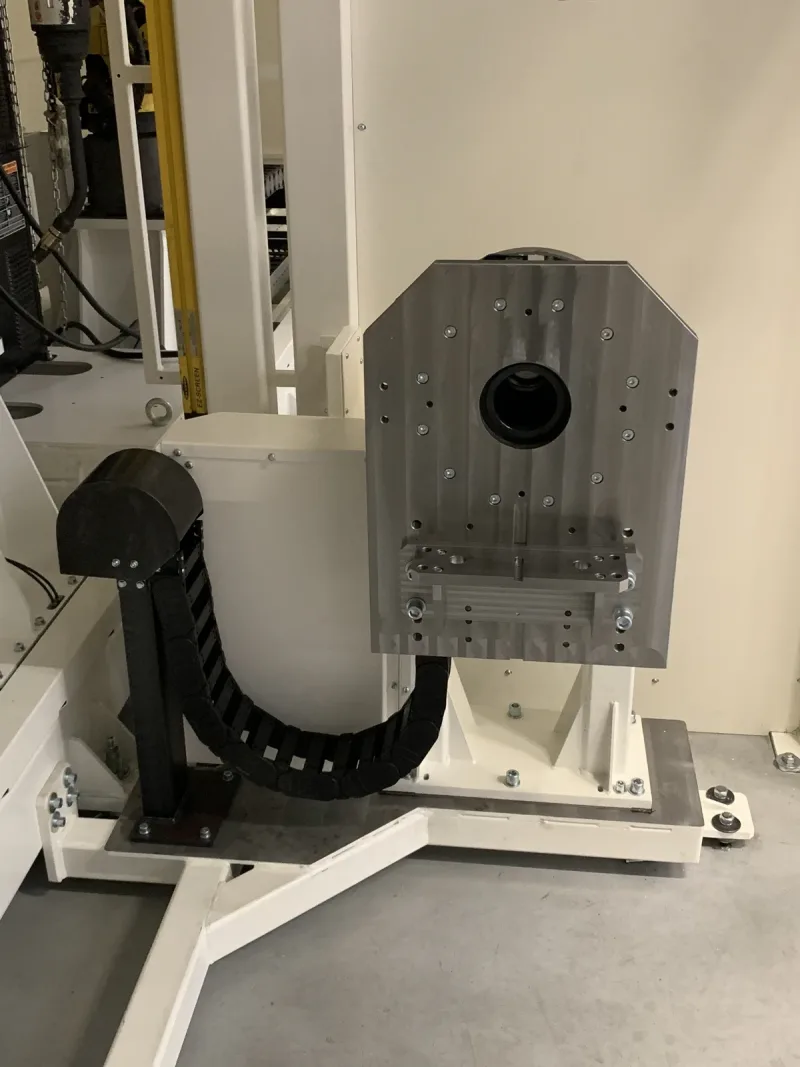
Two FANUC robots work on a shared seventh axis. Loading takes place on one side and welding on the other. The welding power sources were supplied by the customer.
The robot, the part and the entire work cycle
To design the program, we also need to know the equipment and operations around the robot. Information about them helps distinguish a change of movement from a broader modification of the workstation.
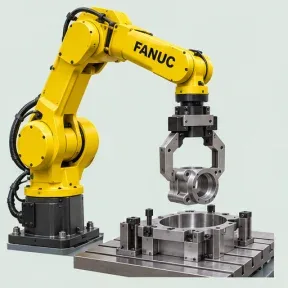
Robot with part and tool
State the robot model, the control system and the available backups. For the part, add the dimensions, weight, centre of gravity and contact surfaces; describe the tool and its weight separately. Include all variants the application is to process.
Work path and surroundings
Show the positions for loading, gripping and unloading the part, the surrounding equipment and the space for movement. Access for operators and maintenance is also important. For a variant change, mark what changes on the fixture, the tool or the product position.
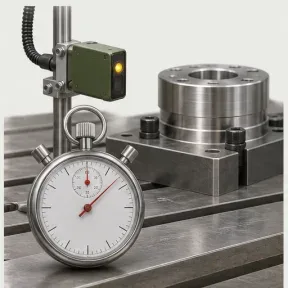
Cycle including waiting times
Capture the movement time, tool operation, waiting for other equipment, and loading and unloading. Describe the conditions for part transfer and the exchange of states with the workstation control system. This allows a change to be specified relative to the entire cycle.
How we prepare the program and commissioning
Analysis of the operation
We go through the part, the process step and the surrounding equipment. When modifying an existing application, a video of the entire cycle and a description of the required change are useful.
Defining equipment and responsibilities
We agree on what remains in place and who will supply the robot, tool, fixtures and other parts. We also specify the scope of the safety solution.
Programming and interfaces
We prepare the agreed program and the interfaces with the workstation control system. During commissioning, we verify the movements, the tool operation and the exchange of states with surrounding equipment.
Tests and handover to operators
We demonstrate the cycle and the required variants according to the agreed conditions. The scope of training, backups and documentation is defined for the specific order.
We assess the entire cycle and the result of the operation
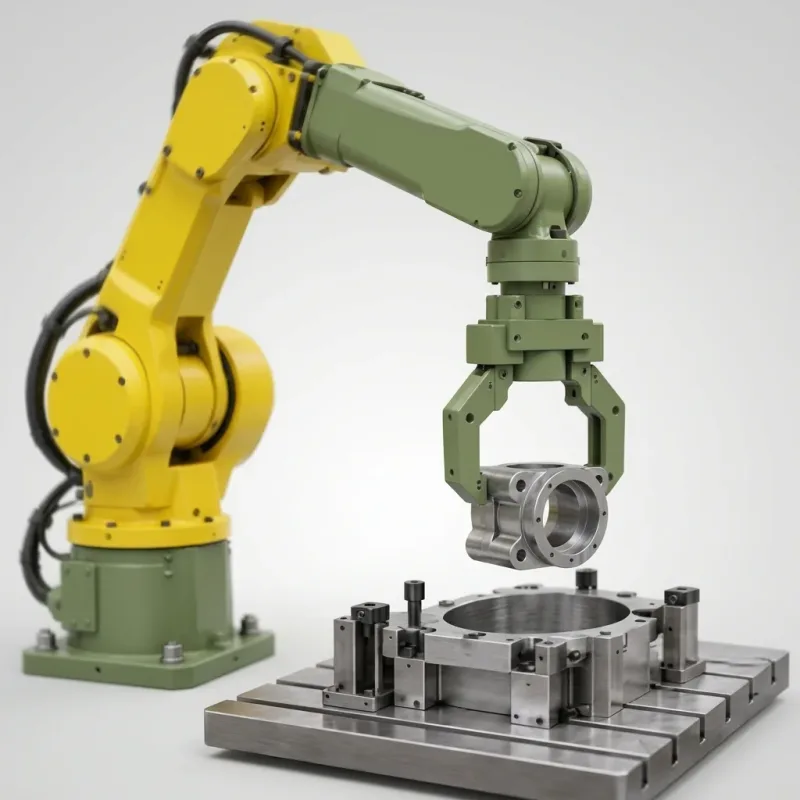
Movements with the part and tool
Verification of the agreed operation sequence with actual loading, gripping and workstation interfaces.
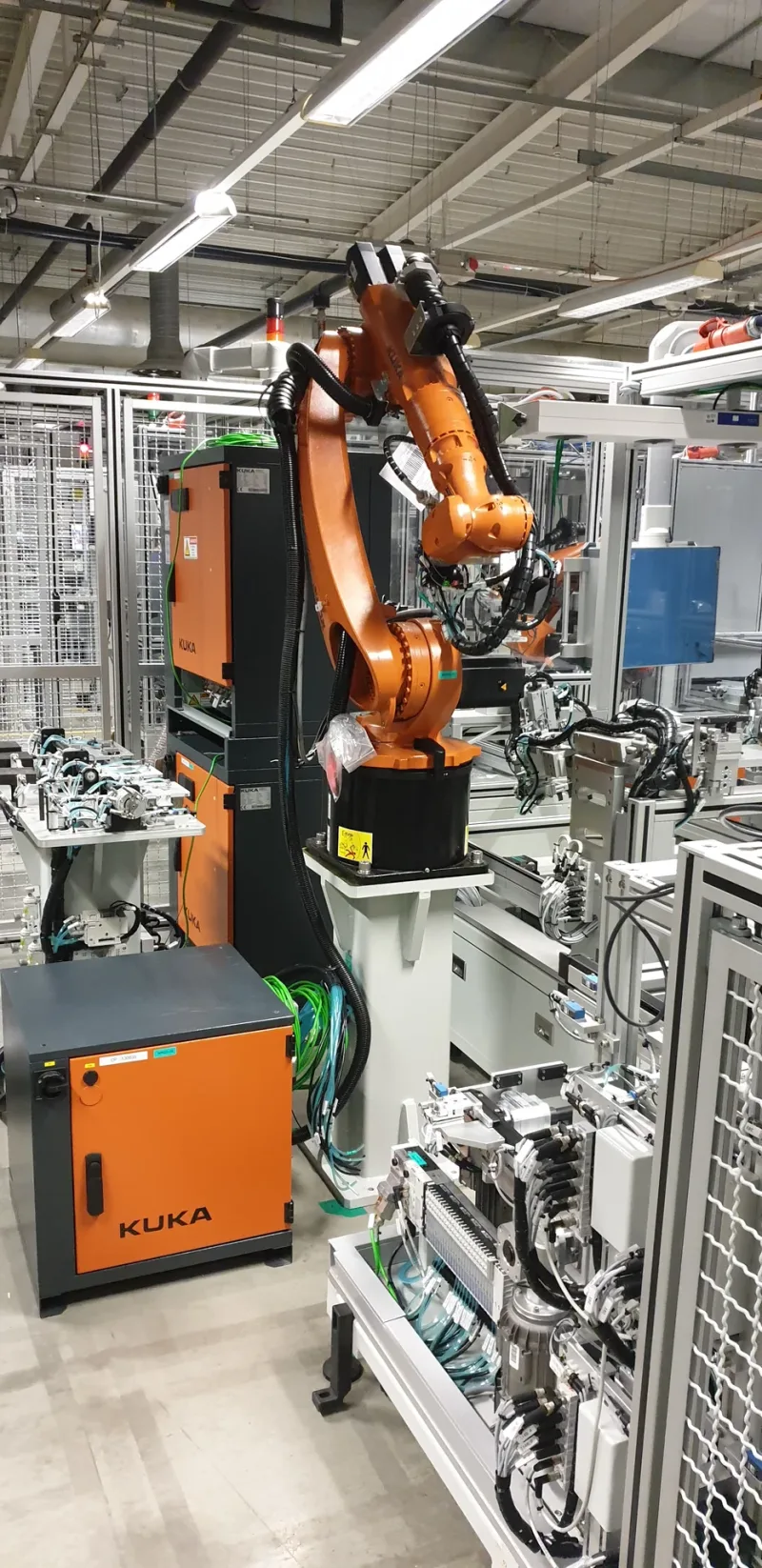
Cycle time in context
Evaluation of the agreed cycle, including tool operation, waiting, loading and unloading. Faster movement alone does not describe the performance of the entire workstation.
Operation and documents handed over
The agreed procedure for starting, interrupting and resuming work; a defined scope of training, program backups and documentation.
Changing a robotic application: who supplies the tool?
Before assessing the price, distinguish programming from the equipment needed for the operation.
An example from our projects: for the two-robot welding station, the welding power sources were supplied by the customer. The name of the robotic workstation alone therefore does not determine who supplies the individual technology parts.
In the brief, mark the robot, tool and fixture you already have, as well as the parts that are to be newly built. Together we define the work movements, signal transfer and the interface with the operator.
Questions about programming and equipment
Where can I see examples of robotic workstations?
Our projects include a two-robot welding station and a robotic cell for plasma cutting.
Can our own robot and tool be used?
State their specific type, control system, condition and available documentation. We assess whether the equipment can be retained according to the required operation and interfaces.
Do you supply just the program or the entire workstation?
In your enquiry, distinguish between the required programming, modification of an existing cell and a new workstation. The split of supply for the robot, mechanics, electrical parts, tool and fixtures is defined in the specific quotation.
Can we add a new product to an existing cell?
This depends on the geometry and weight of the part, the tool, the space and the control system. Send a description of the new variant and the current procedure, including how the part is loaded and unloaded.
How do we specify a requirement for a shorter cycle?
State the current time, the target time and the sequence of the individual steps. Delays may arise from robot movement, tool operation, waiting for other equipment or the operator.
How can the operator monitor what happens inside the cell?
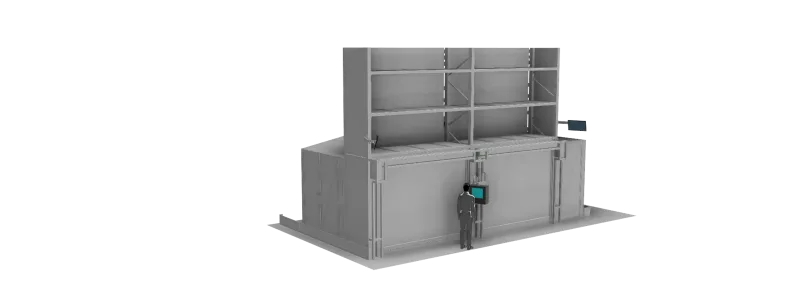
In our welding station, there is a monitor next to the control panel showing the image from a camera recording the work area. It is a view of the area for the operator. If a view of the operation is important for your brief, describe what the operator should see and from where they control the workstation.
How do we describe a changeover between product variants?
State which parts are changed manually and which by program settings, who carries out the changeover and how readiness for the correct variant is recognised. Attach a description of the current tool, fixture and loading method. The scope of the modification is assessed according to the specific cell.
Can we also enquire about robots of brands other than FANUC?
An enquiry can be prepared for FANUC, KUKA, ABB, Yaskawa and Stäubli robots as well as UR and Doosan collaborative robots. State the specific model, control system, tool and required operation. We assess the scope of programming, the documents needed and the integration options in advance; the FANUC partnership applies to this specific brand.
Why choose our services?
Complete tailored solutions
We tailor the programming to your specific needs.
Increased productivity
Robots work faster, more precisely and without unnecessary downtime.
Cost optimisation
Robotisation reduces operating costs and eliminates waste.
Flexibility and scalability
Our solutions allow easy expansion and modifications.
Support and service
We offer long-term technical support, maintenance and operator training.
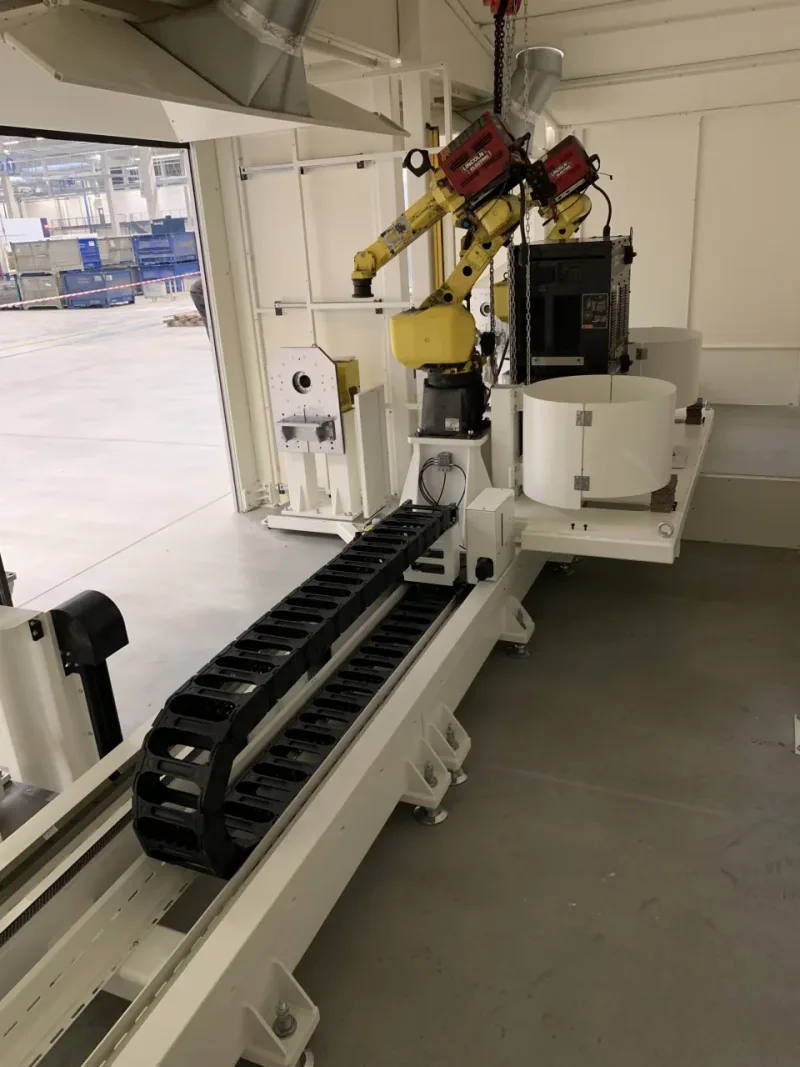
Industrial robot programming is a key step towards efficient, modern production. It enables the automation of repetitive tasks, higher precision, lower error rates and optimised production processes. Whether you need robotic welding, assembly, material handling or palletising, we create a solution exactly to your requirements.
Projects and technologies we work with
We have experience in a wide range of industries - automotive, mechanical engineering, food, pharmaceutical and others.
We work with robots from the world's leading manufacturers, such as:
- FANUC
- KUKA
- ABB
- Universal Robots (UR)
- Doosan
- Yaskawa (Motoman)
- Stäubli
In addition to robot programming, we also offer their integration with PLC systems, HMI panels and SCADA software for full control of the production process.
How would you like to contact us?
Contact us directly
+420 778 080 606 sekela@sekela.cz
Continue via the enquiry form
Describe what you need. You can attach supporting documents.