
 Česky
 Deutsch
 Italiano
 Polski
 Français
 Srpski
Design and manufacture of assembly, inspection and clamping fixtures
We develop and manufacture fixtures tailored to your production
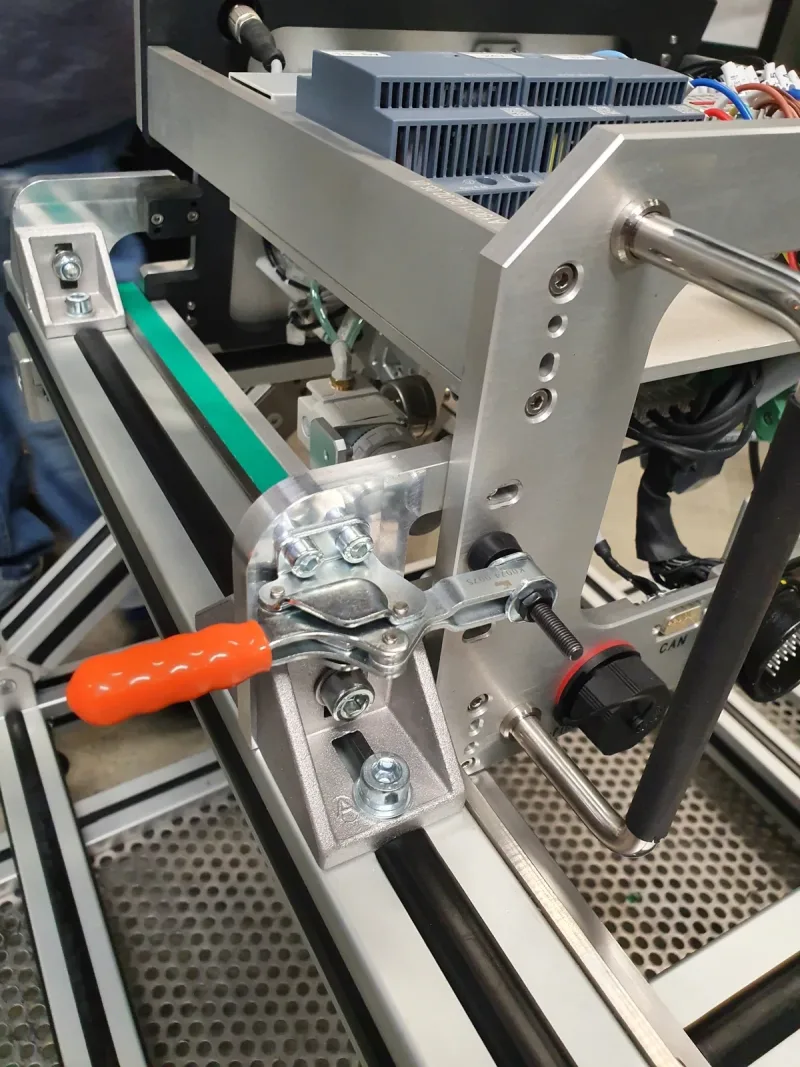
We design and manufacture fixtures for assembly, inspection and clamping during machining. For the design, send a drawing or sample of the part, its variants and a description of the operation. For assembly and inspection, specify which error the fixture should prevent or detect.
What should the fixture ensure during the operation?
We design and manufacture fixtures for a specific production operation: for assembling parts, checking correct fitting and clamping the workpiece during CNC machining. Specify whether you need to hold the part in a given position, guide the operator during assembly or verify correct assembly. Each task places different demands on loading, tool access and releasing the product.
For clamping, describe the permitted contact surfaces and loads. For assembly or inspection, specify the correct state, possible errors and the required response of the workstation.
Custom assembly, inspection and clamping fixtures
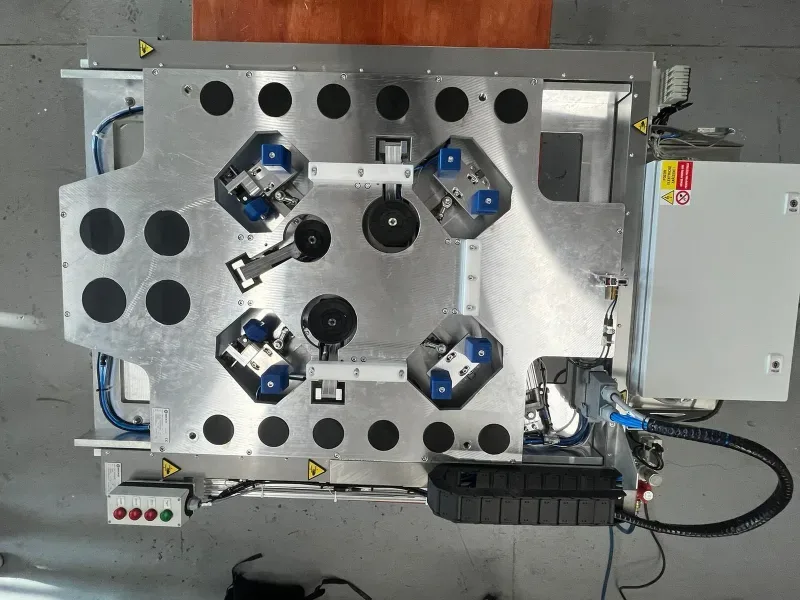
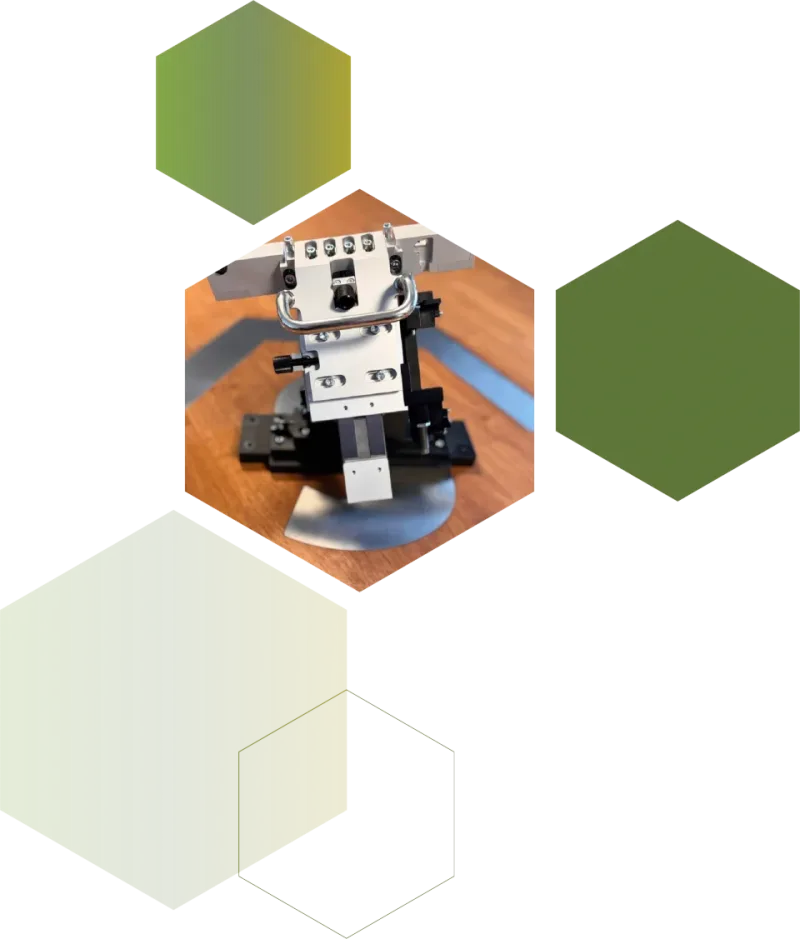
Clamping and positioning
Holding the part for machining or assembly with regard to the support surfaces, tool access and surface protection.
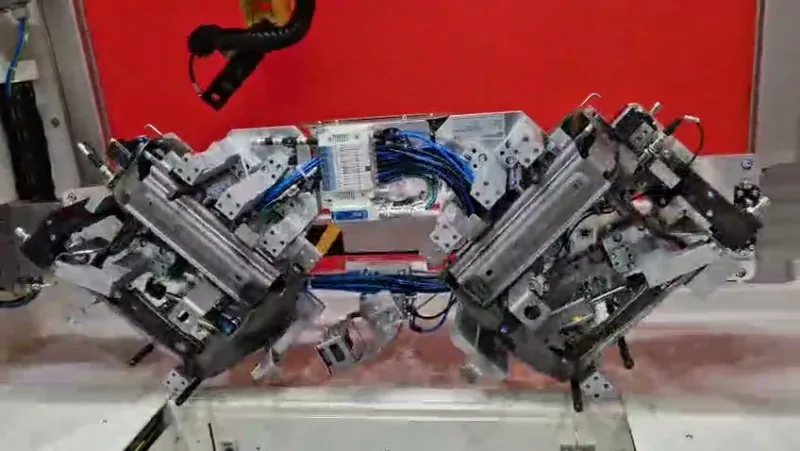
Welding
Setting the relative position of parts during welding. The design is based on the assembly, access to the joints and the method of loading and removal.
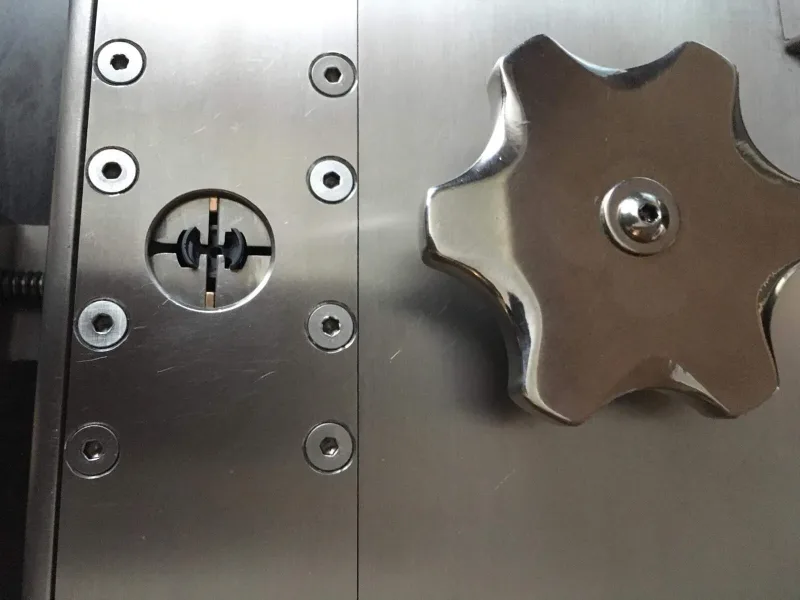
Assembly and inspection
Fixtures for guiding assembly and checking correct part assembly. Depending on the brief, we also assess clipping and crimping equipment, the errors being monitored and the conditions for releasing the product.
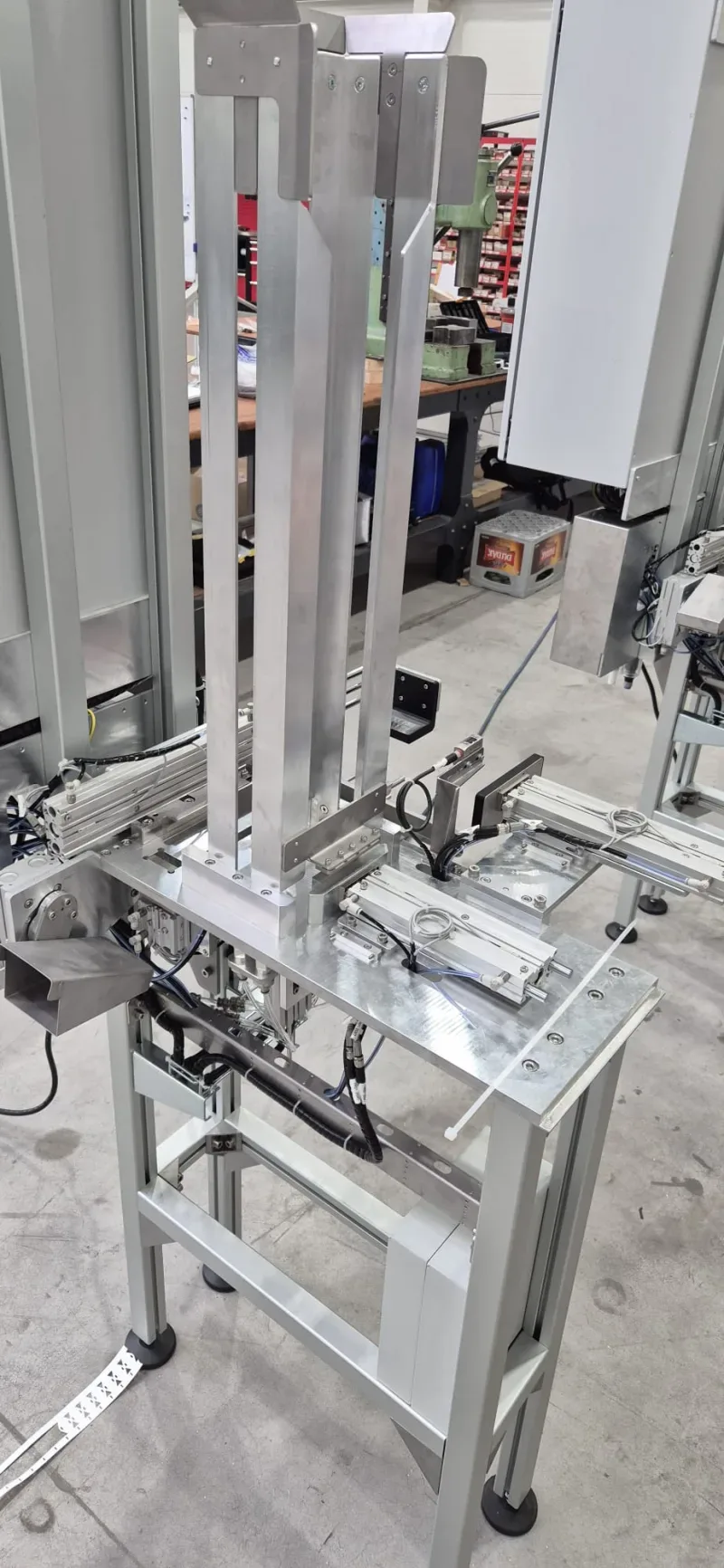
Handling and special
Transferring or positioning the product according to the specific operation and the connected equipment.
Assembly benches, Poka-Yoke fixtures and inspection templates
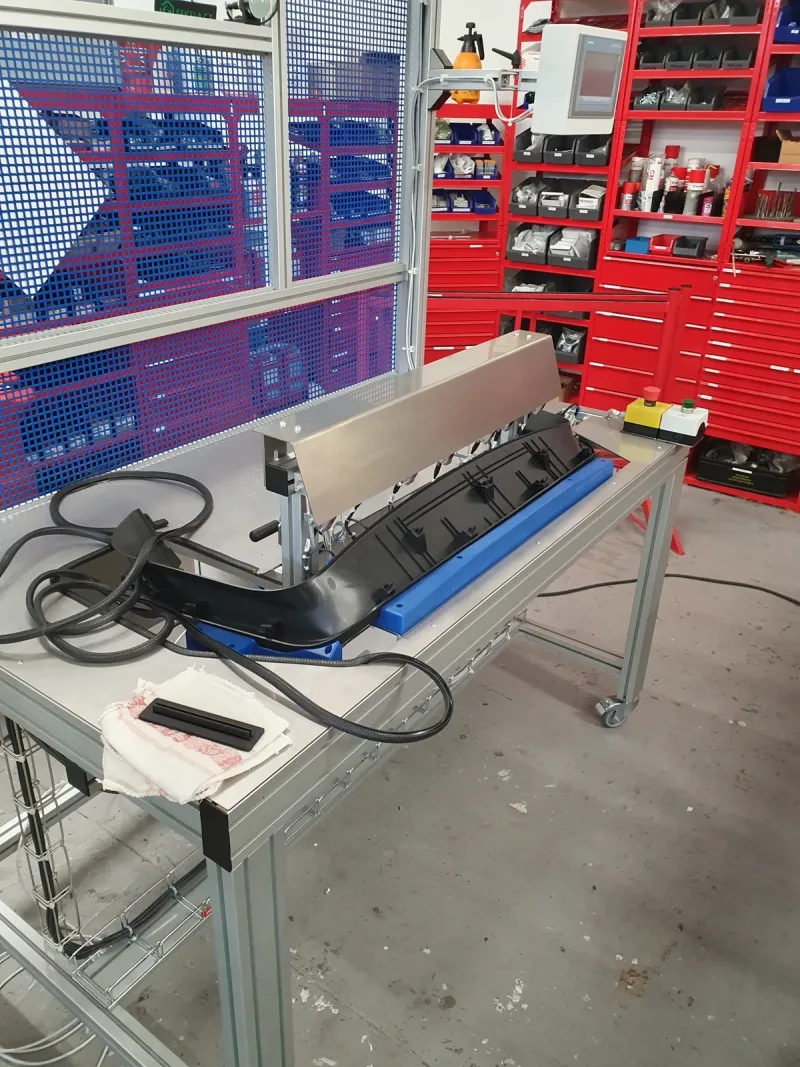
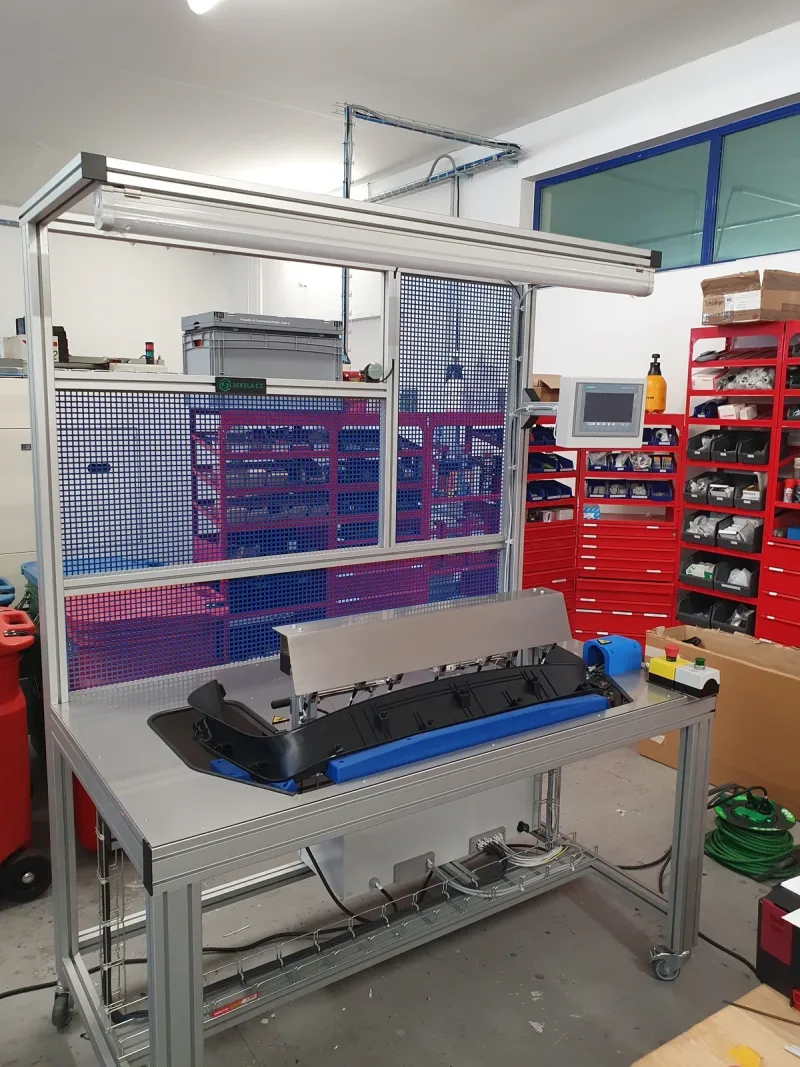
We design fixtures as well as complete assembly and inspection benches. Depending on the operation, we choose mechanical guidance, sensors or a guided work sequence.
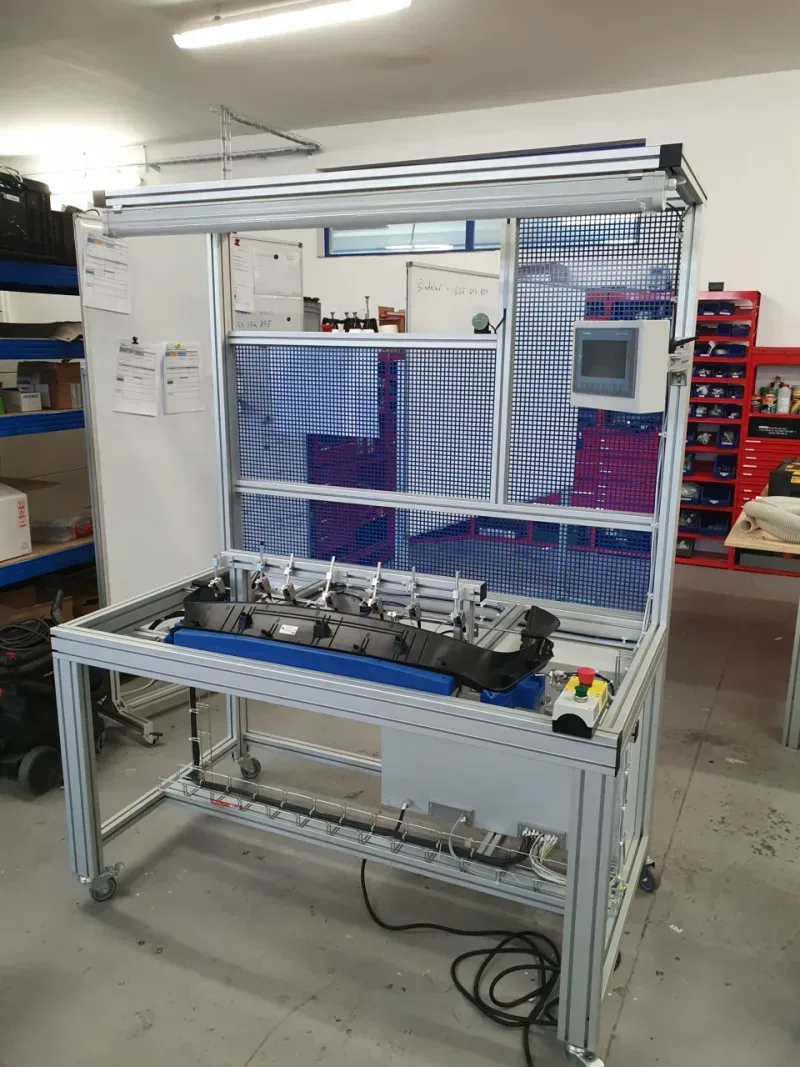
Assembly and inspection benches
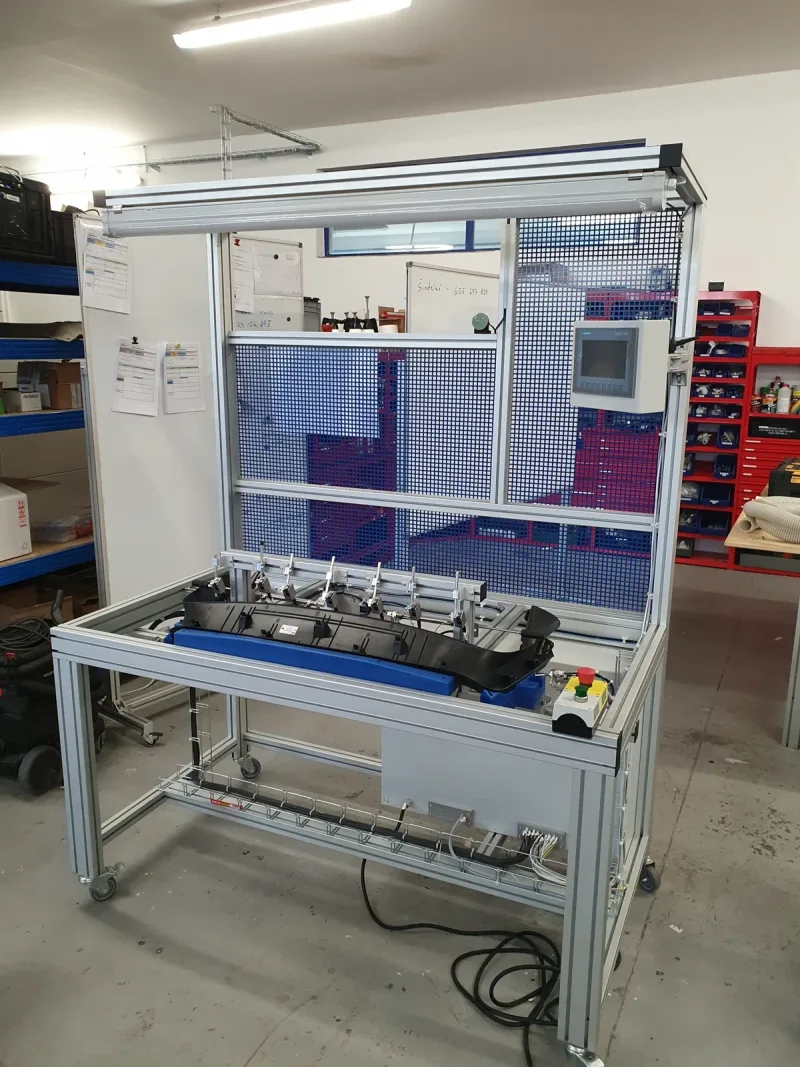
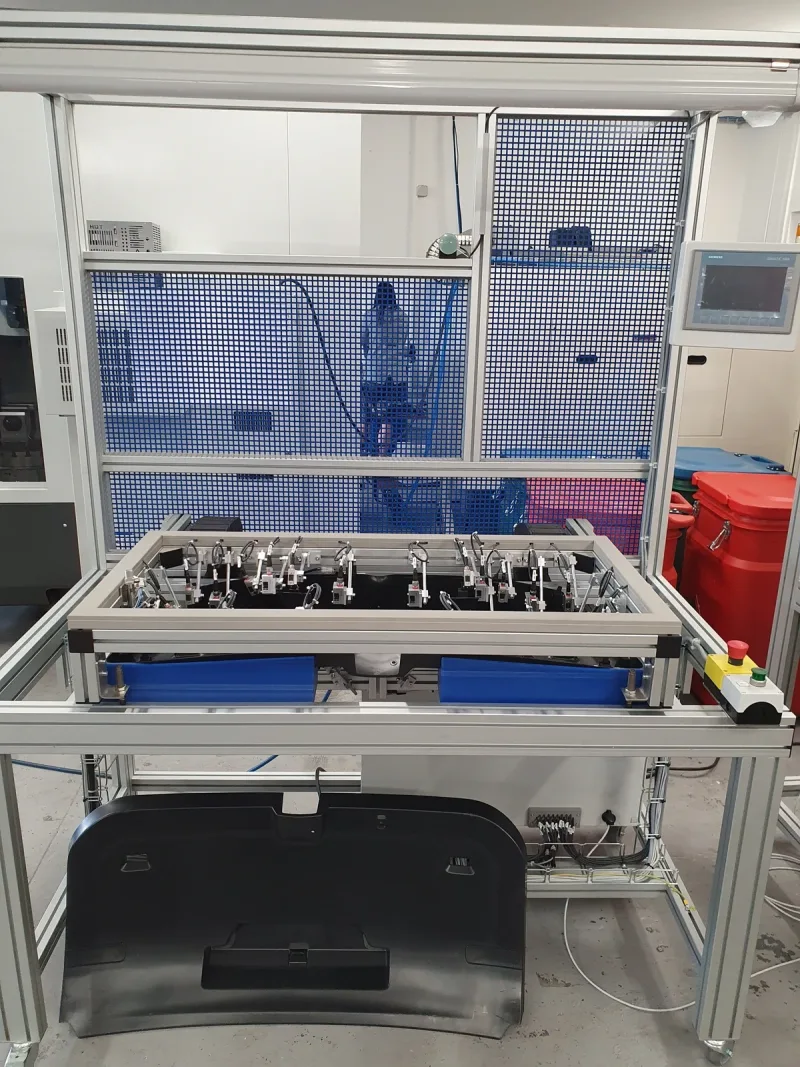
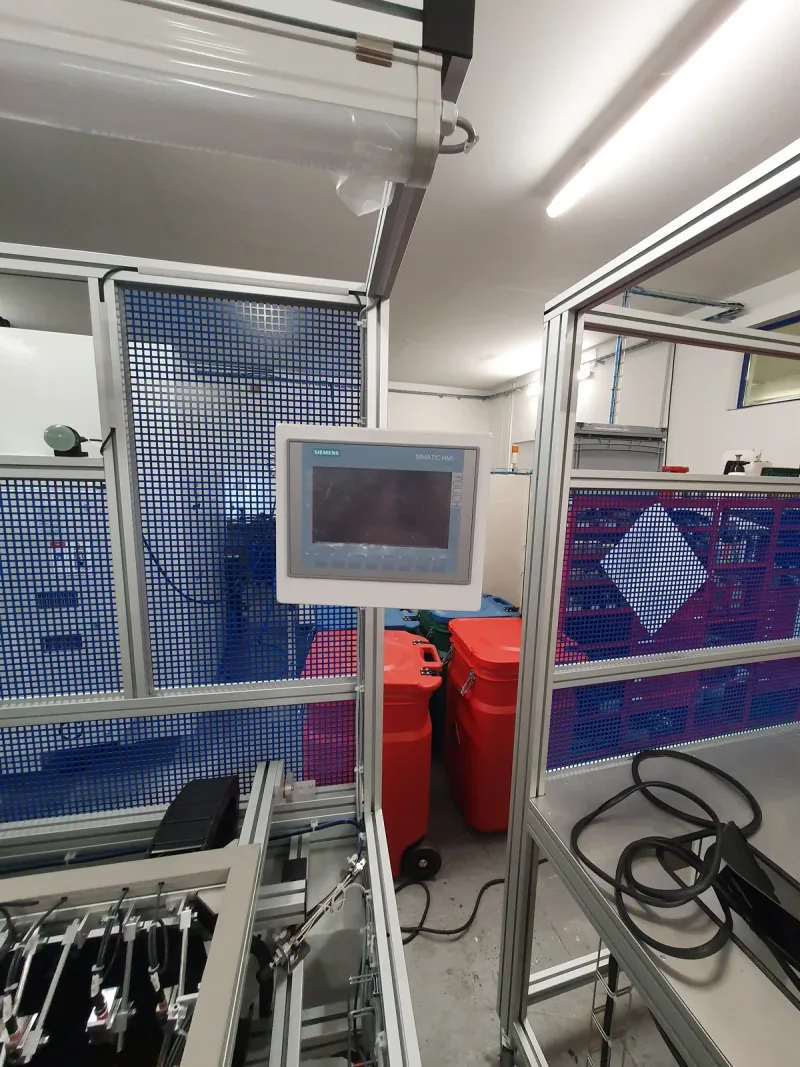
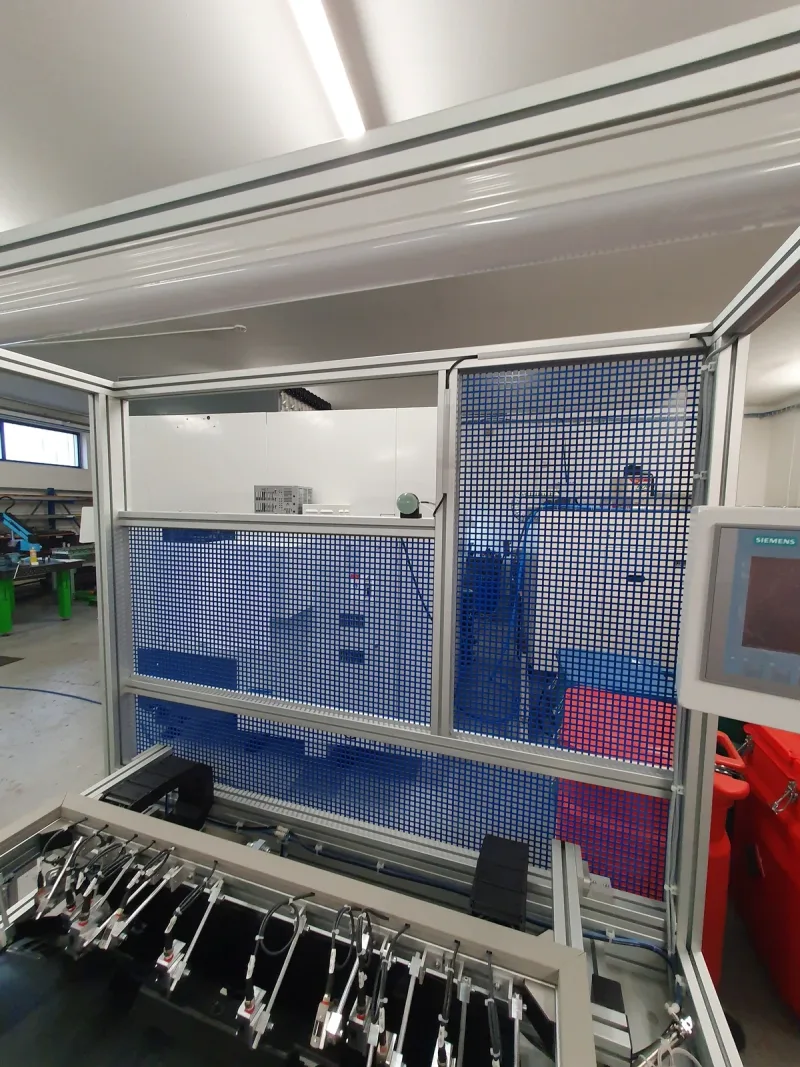
A bench can combine positioning the part, the assembly itself and checking the fitting. We handle tool layout, operator access and part transfer to the next operation.
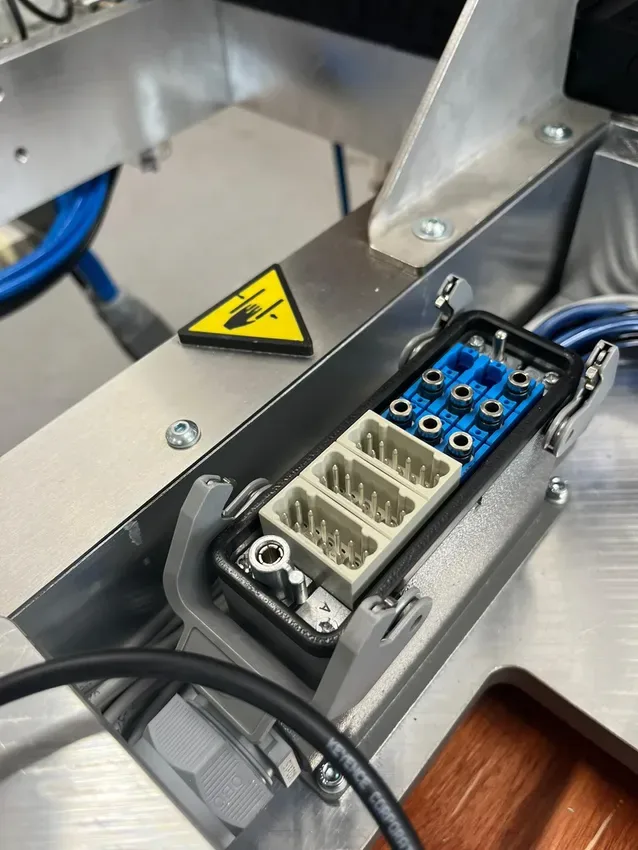
Poka-Yoke against assembly errors
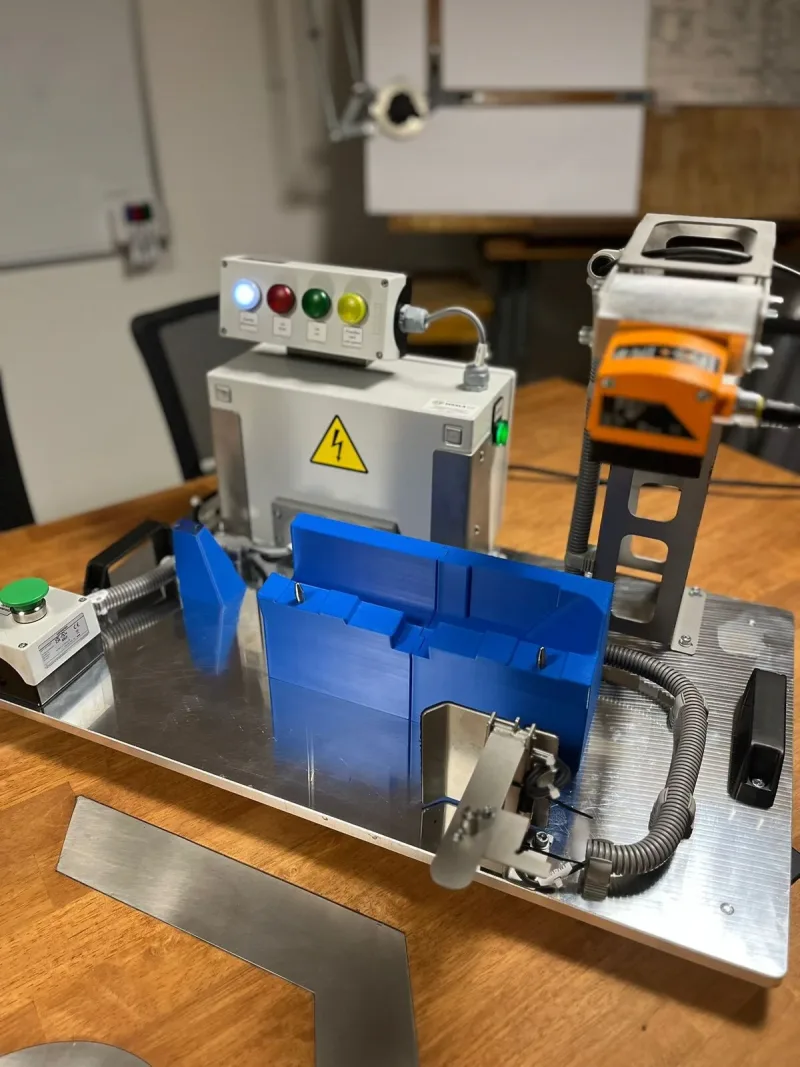
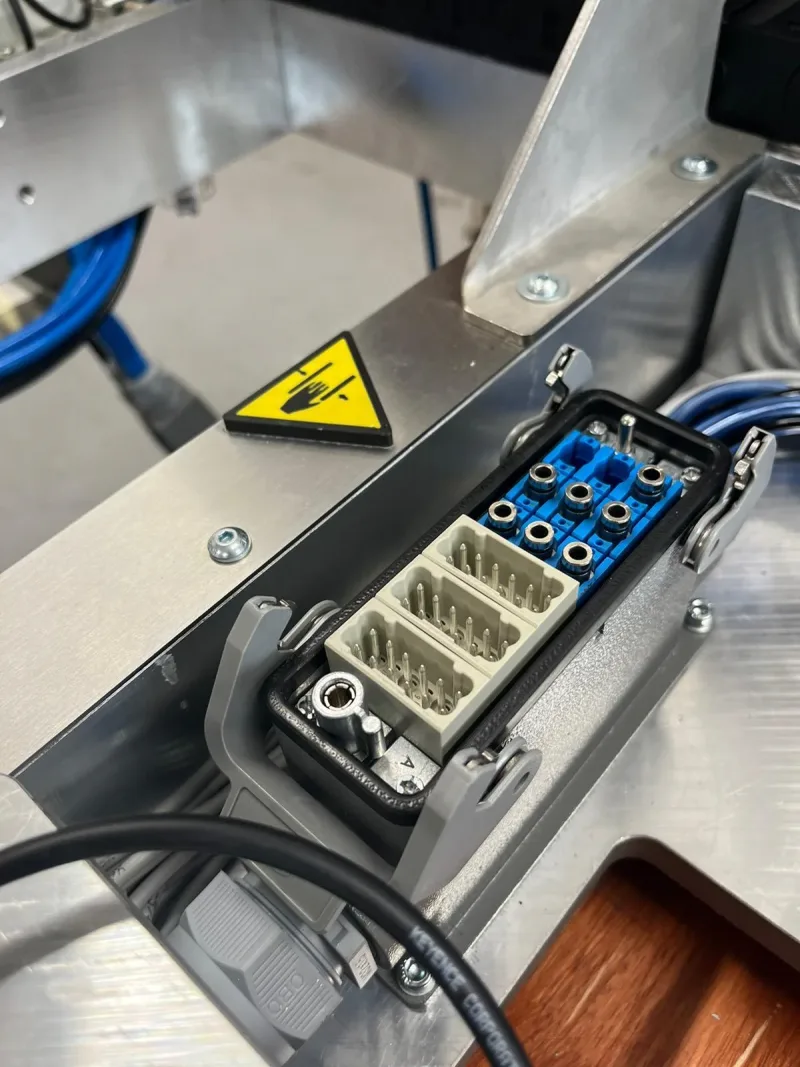
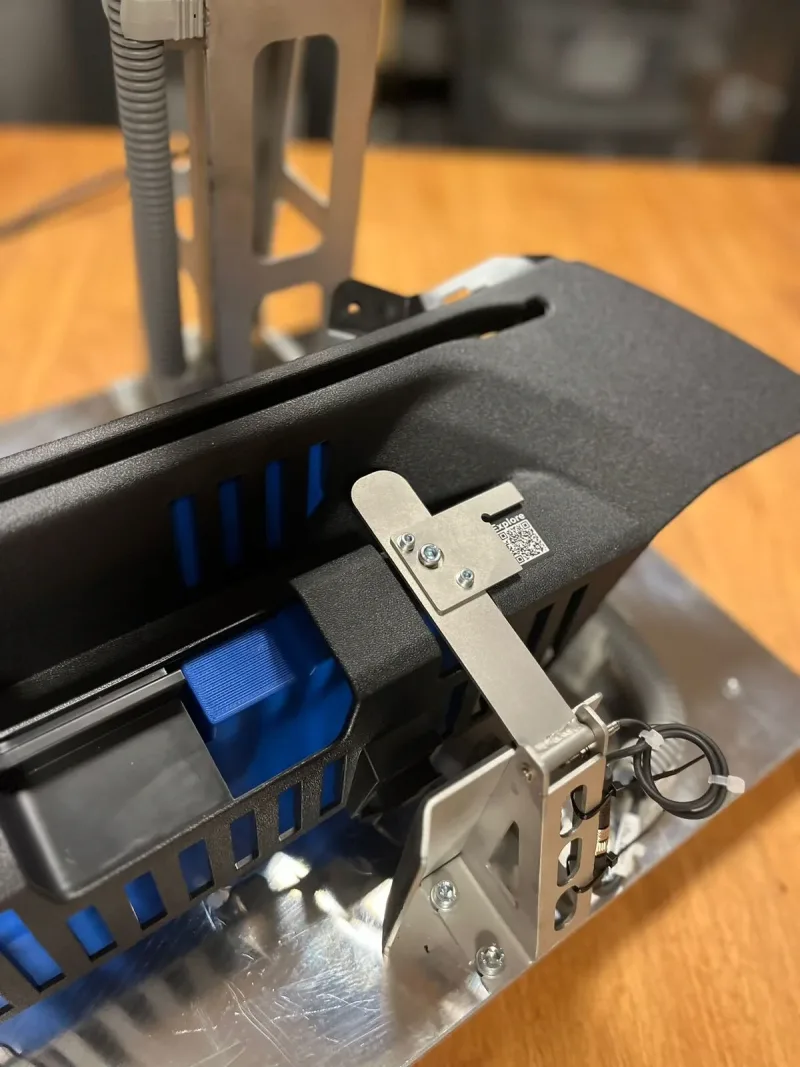
Poka-Yoke can mechanically rule out incorrect part orientation or continuously monitor the correct component and sequence of steps. One example is the guided fitting of wires into M12 connectors.
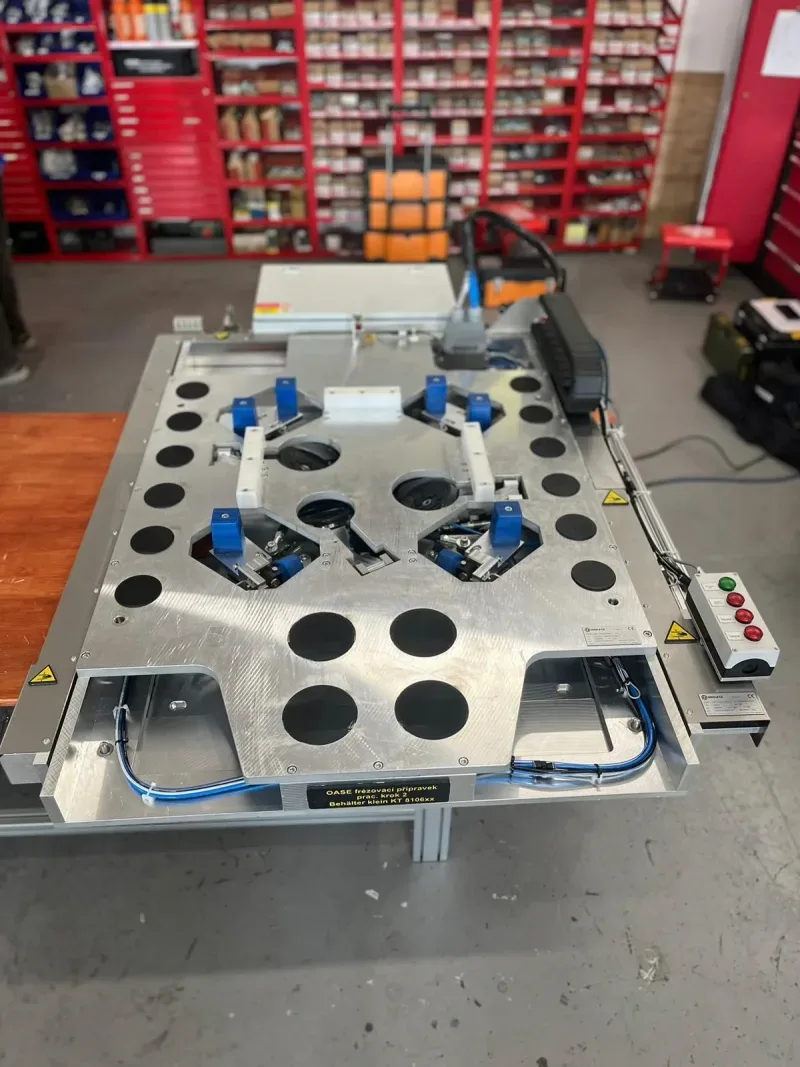
Inspection templates and inspection fixtures
An inspection template verifies a specified shape, position or the presence of a feature. For the design, we need to know the critical characteristics, tolerances and how the part is positioned.
Fixtures with a specific purpose
More photo galleries of equipment and fixtures:
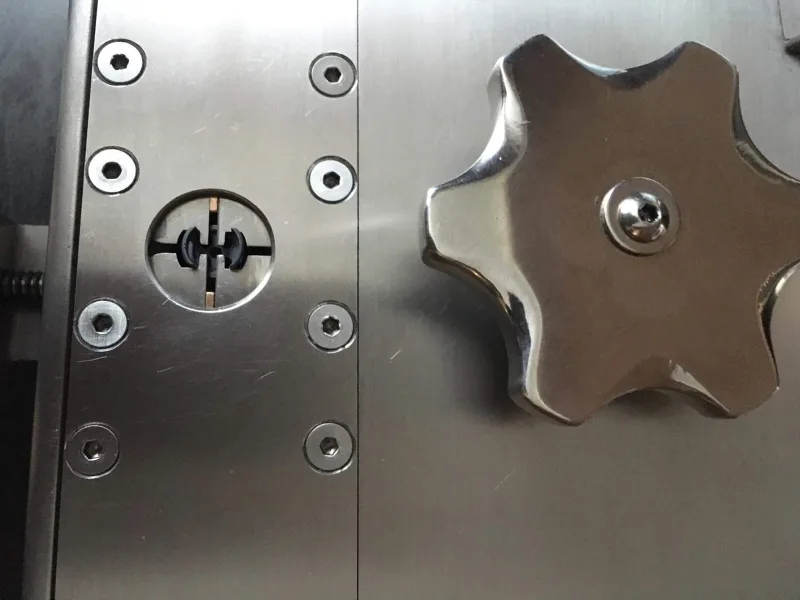
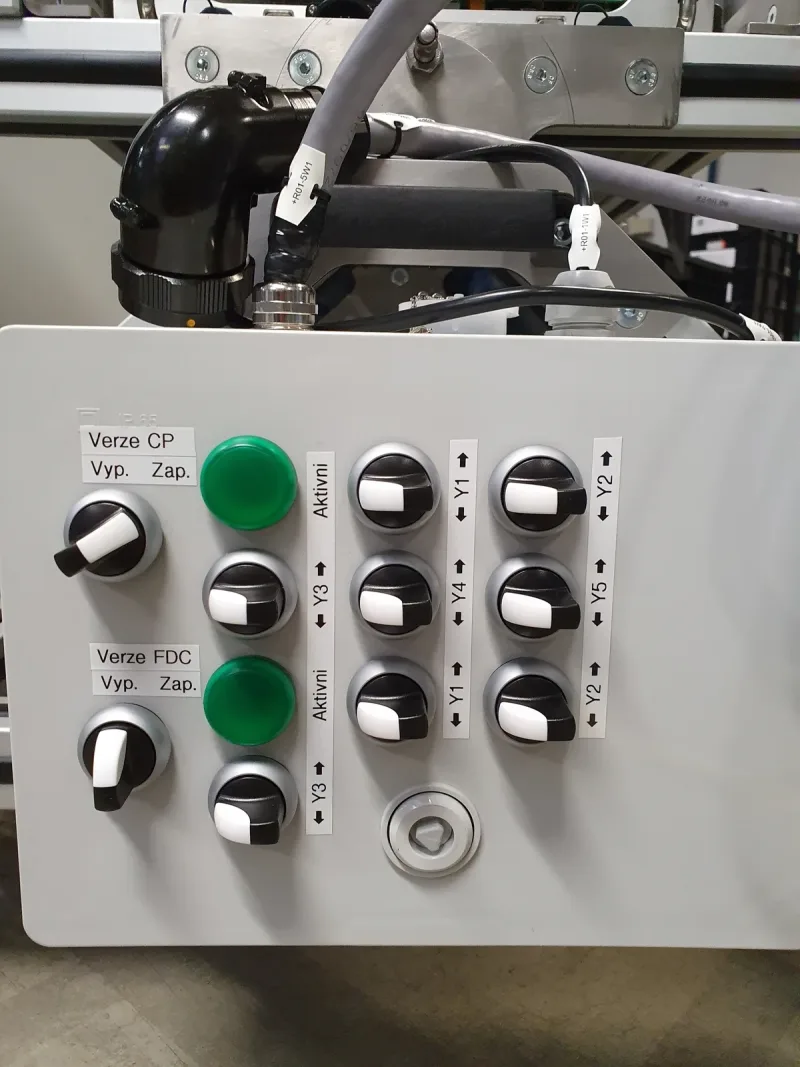
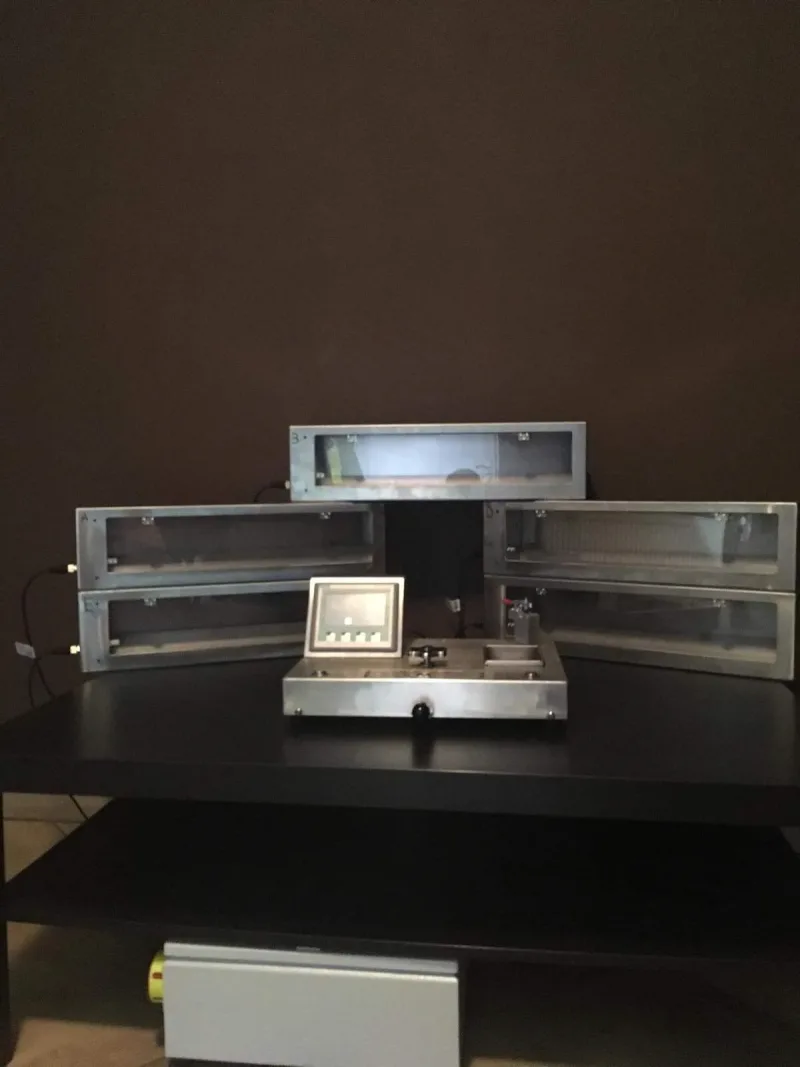
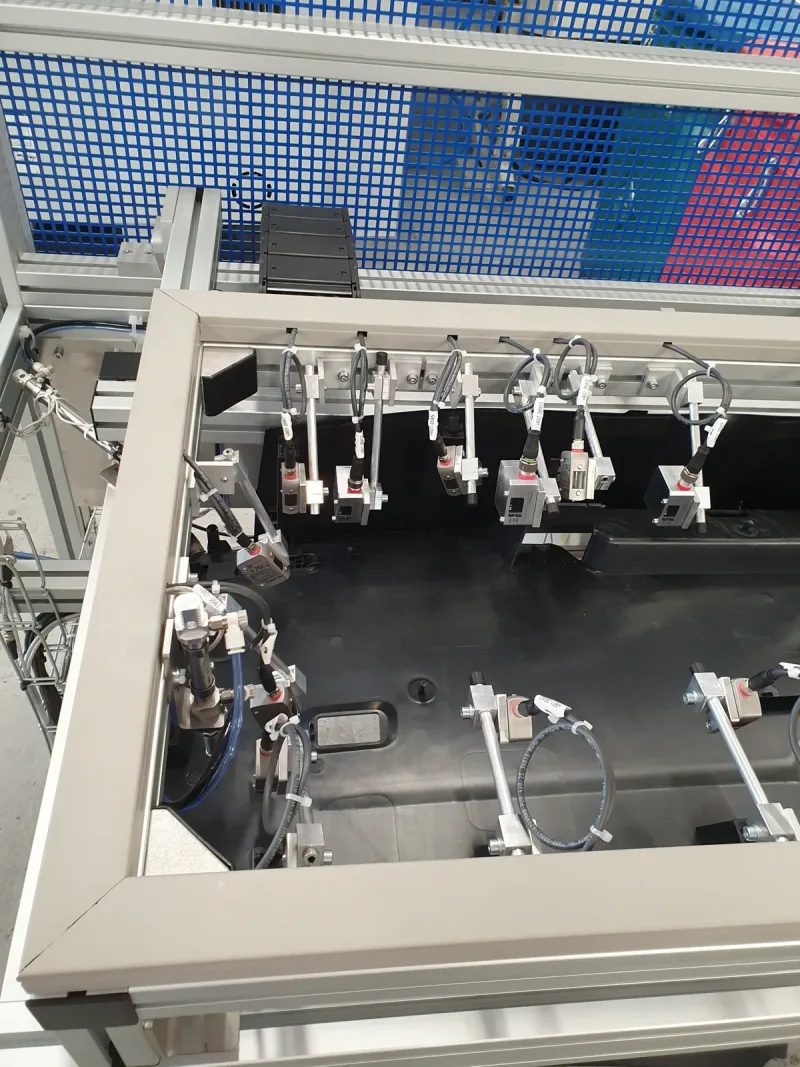
Fixture for guided assembly of M12 connectors
Gradually unlocking the magazines and covering positions that do not apply guides the operator when fitting wires.
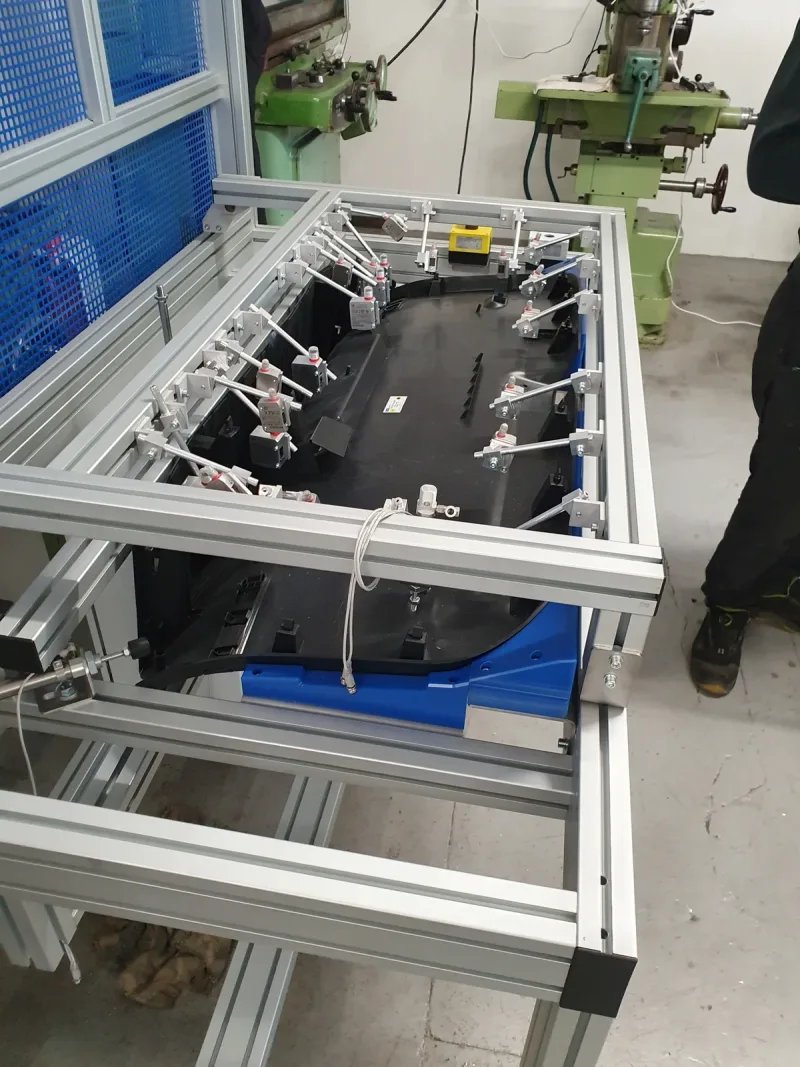
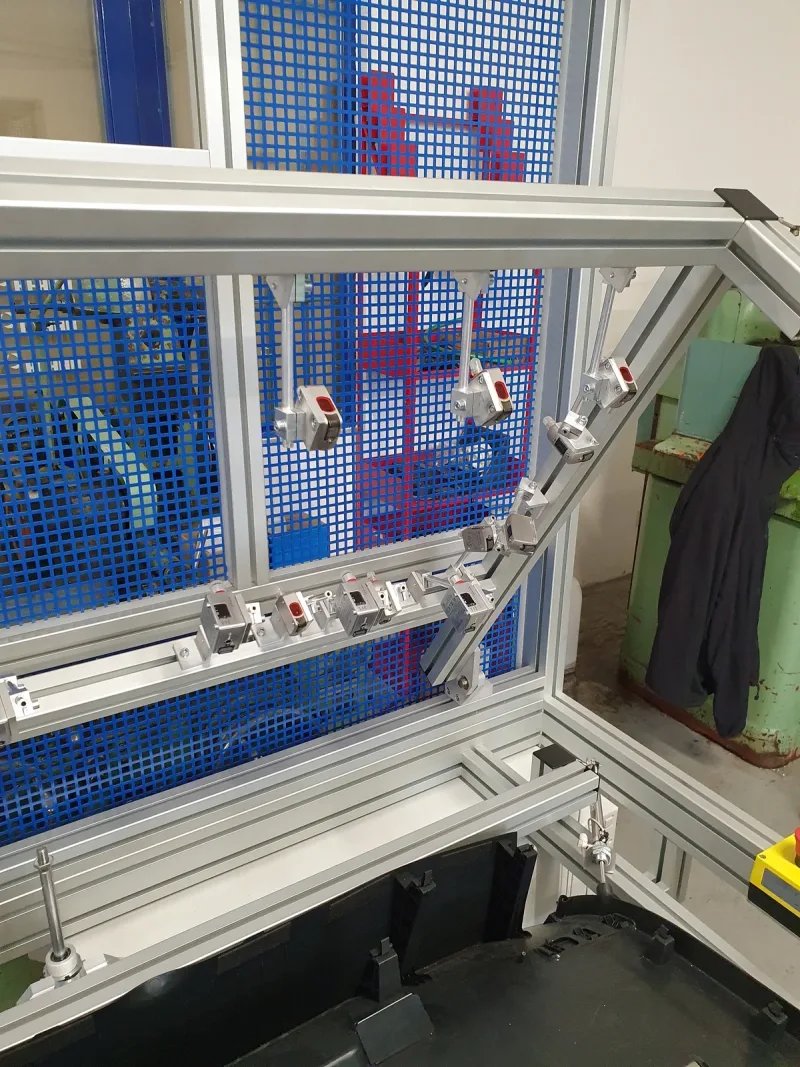
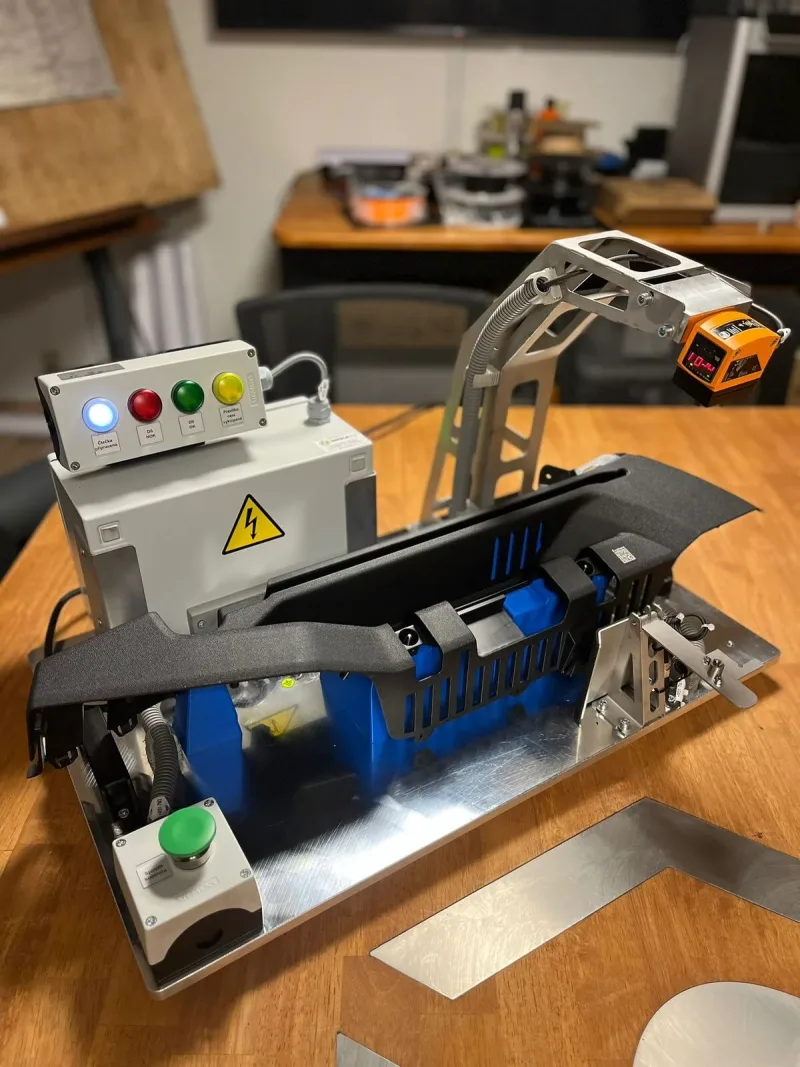
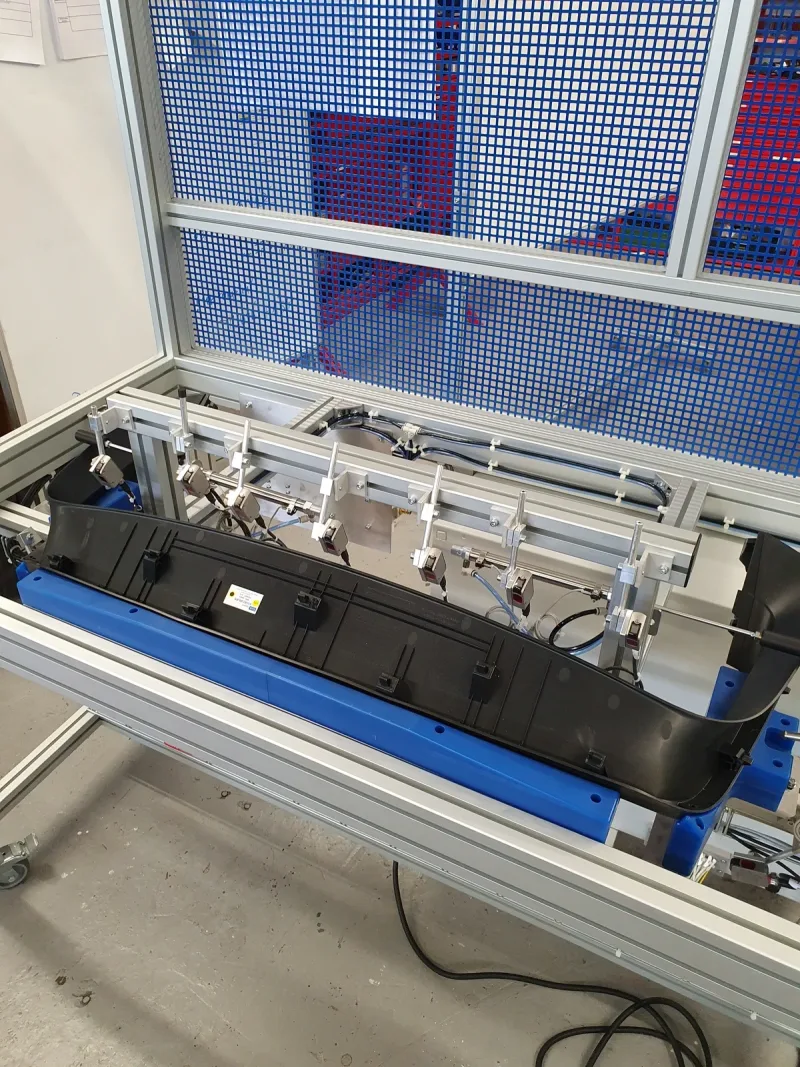
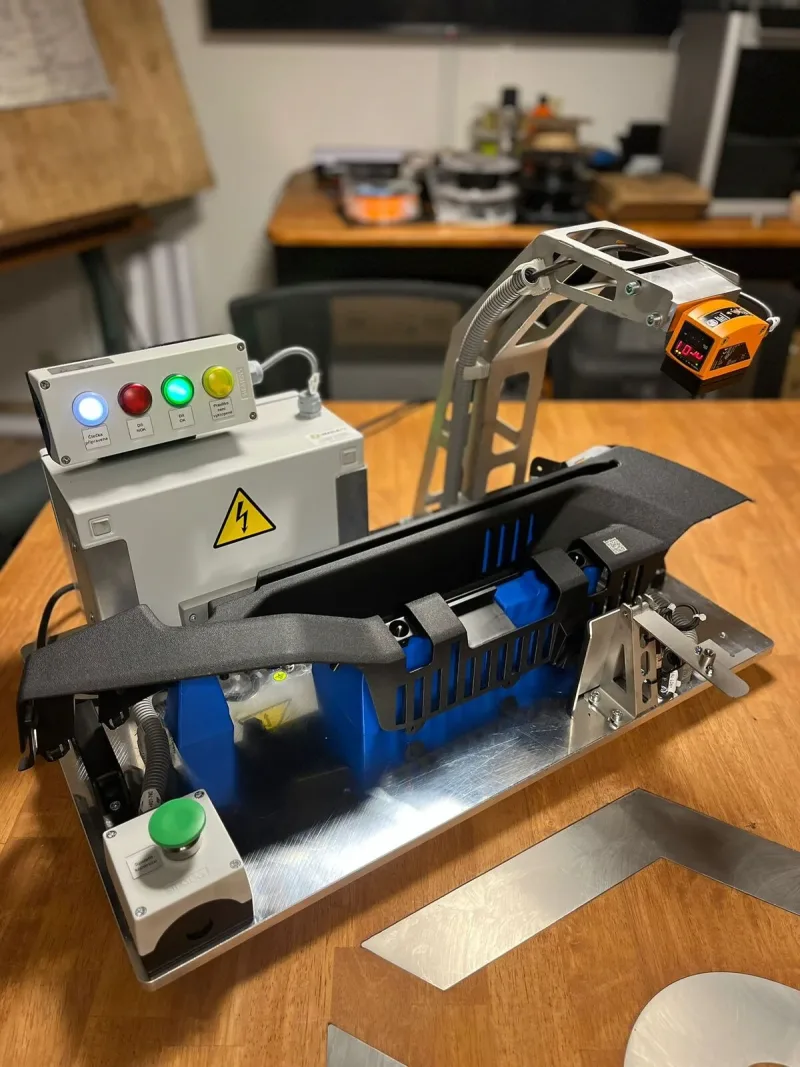
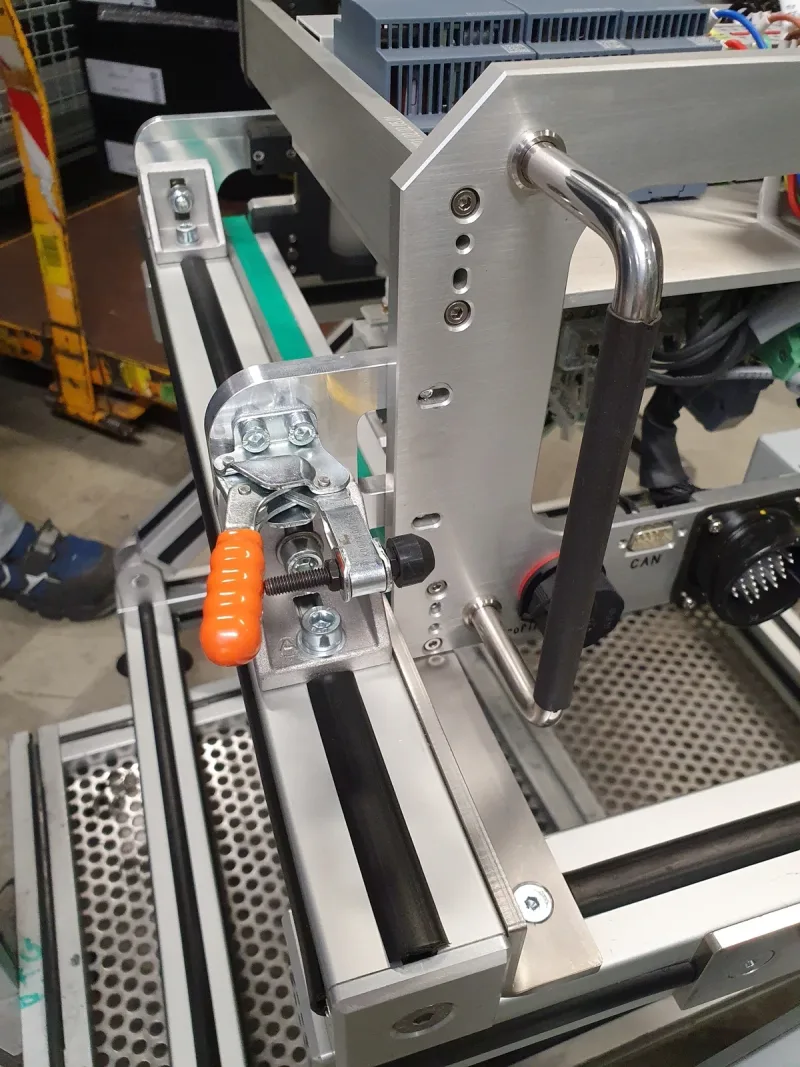
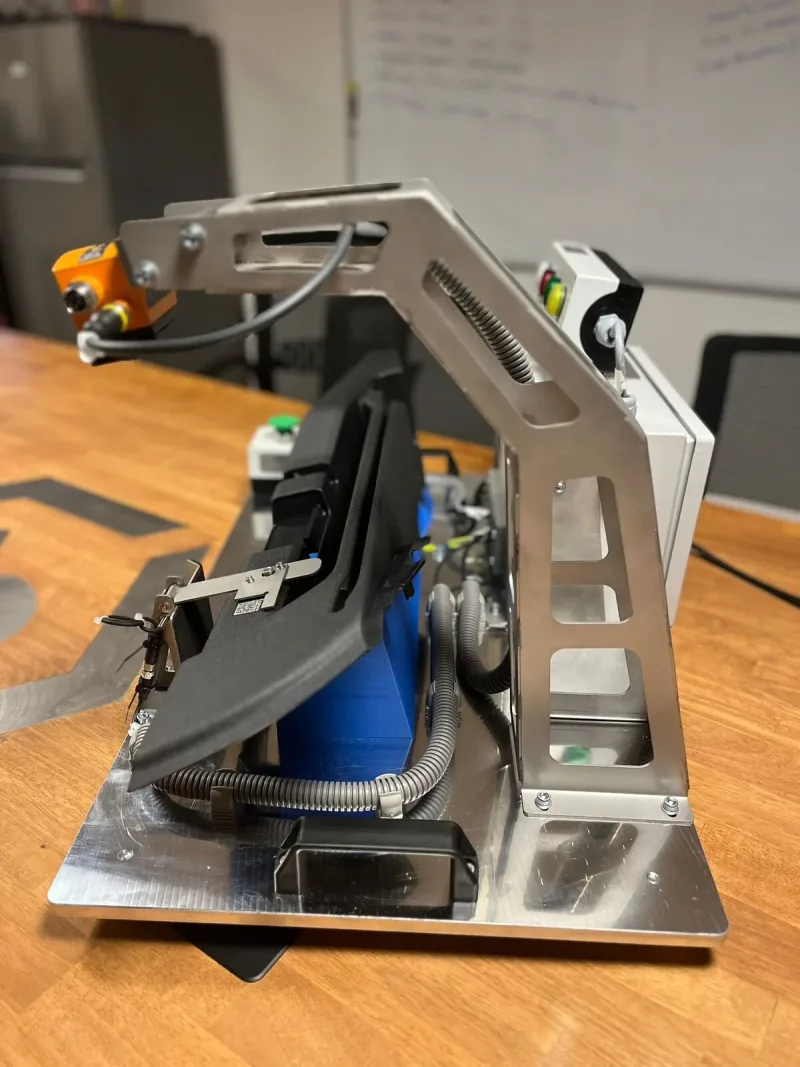
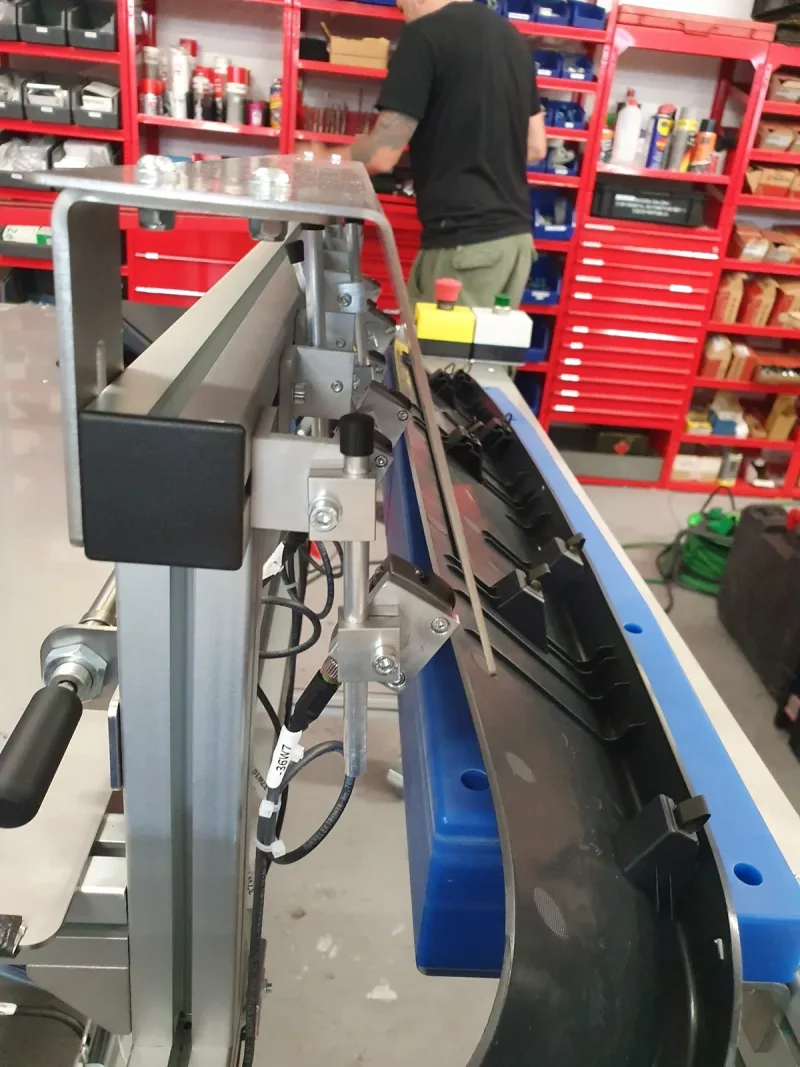
Assembly fixture with locking element inspection
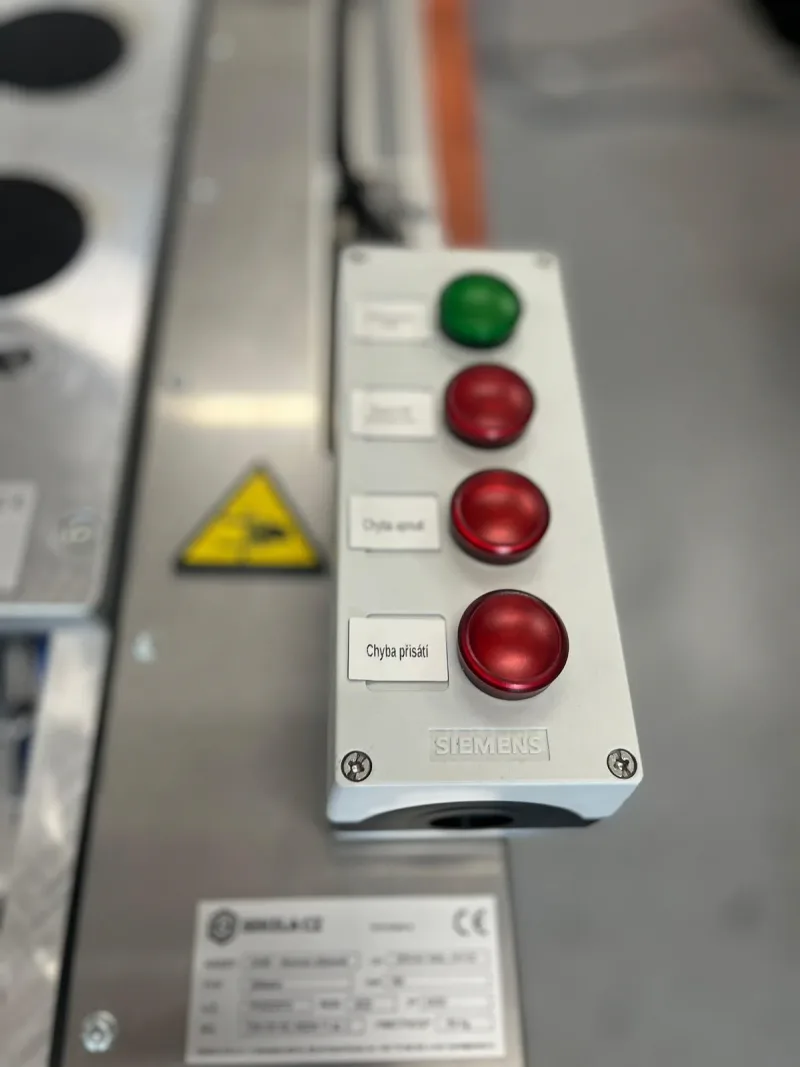
The fixture checks the fitting of the elements. In the event of an error, the part remains clamped and the panel shows the missing position; after correction, the inspection is repeated.
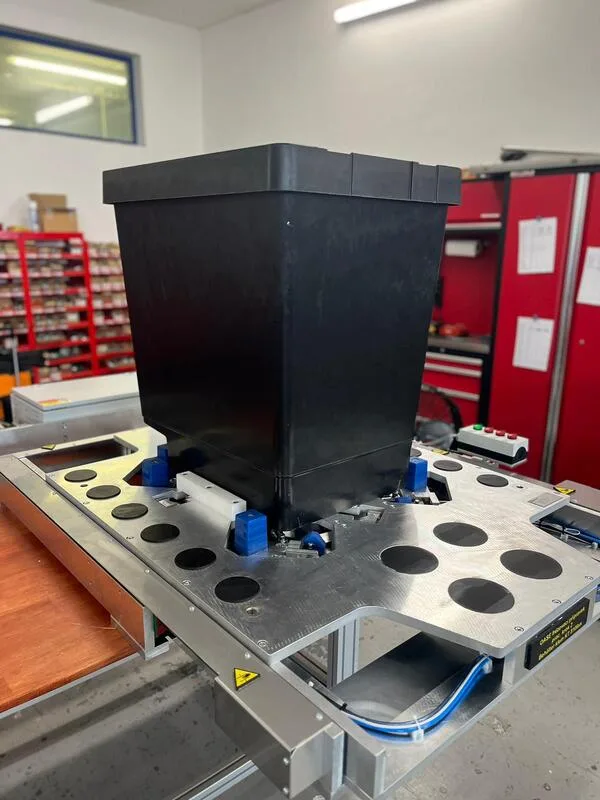
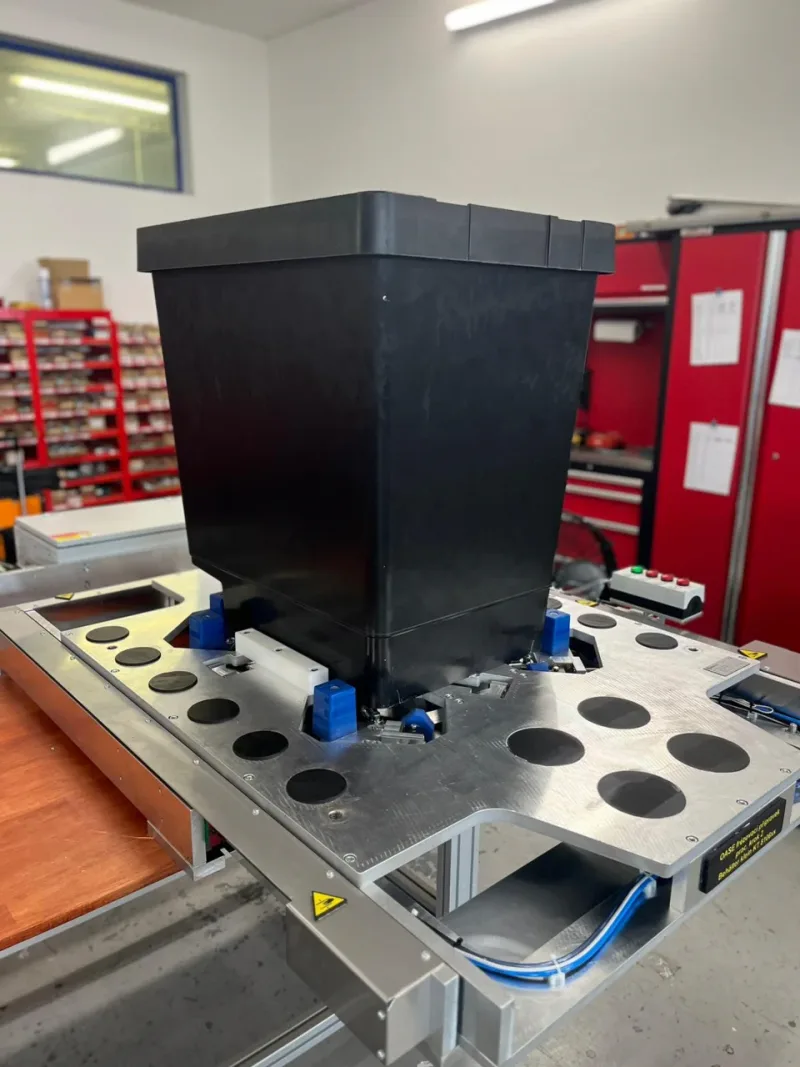
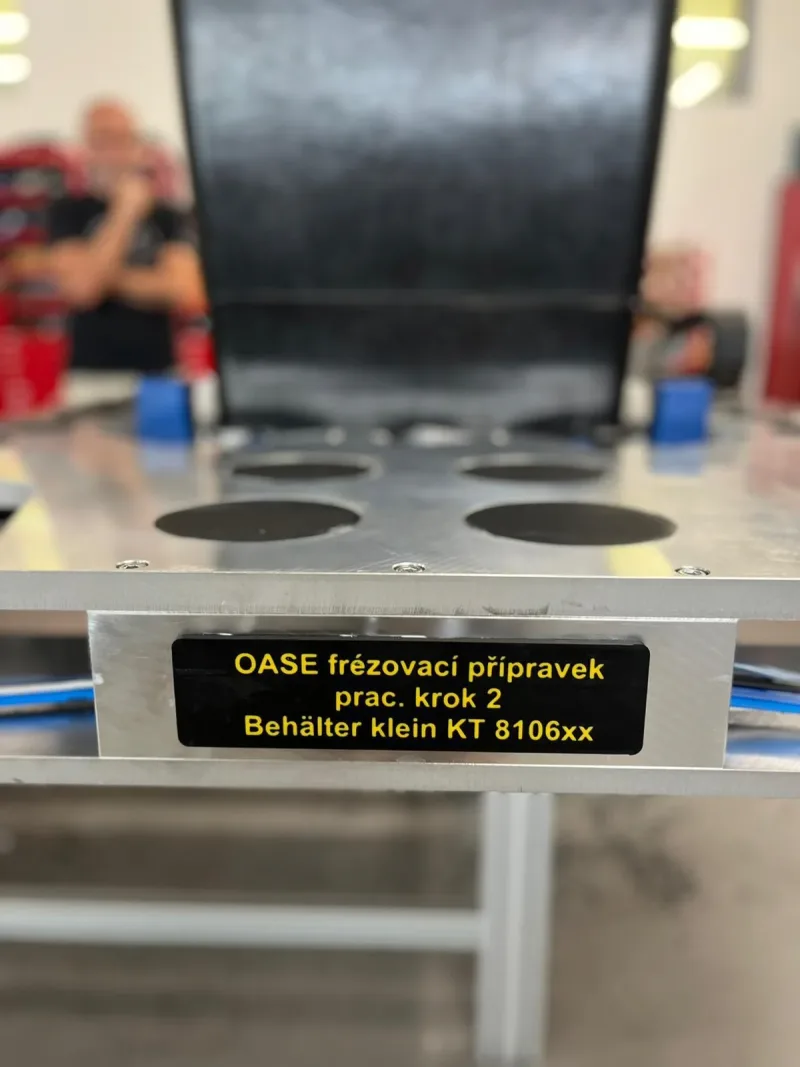
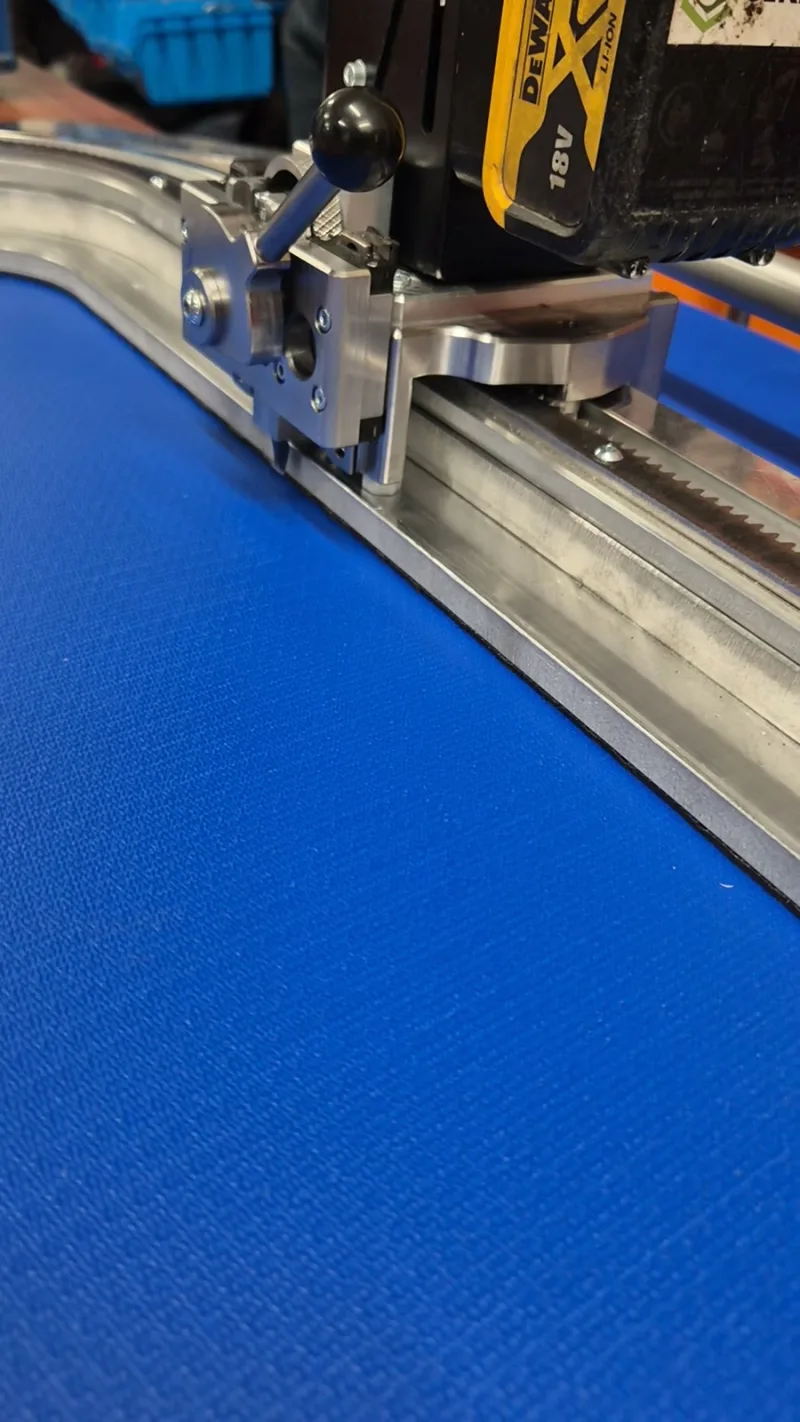
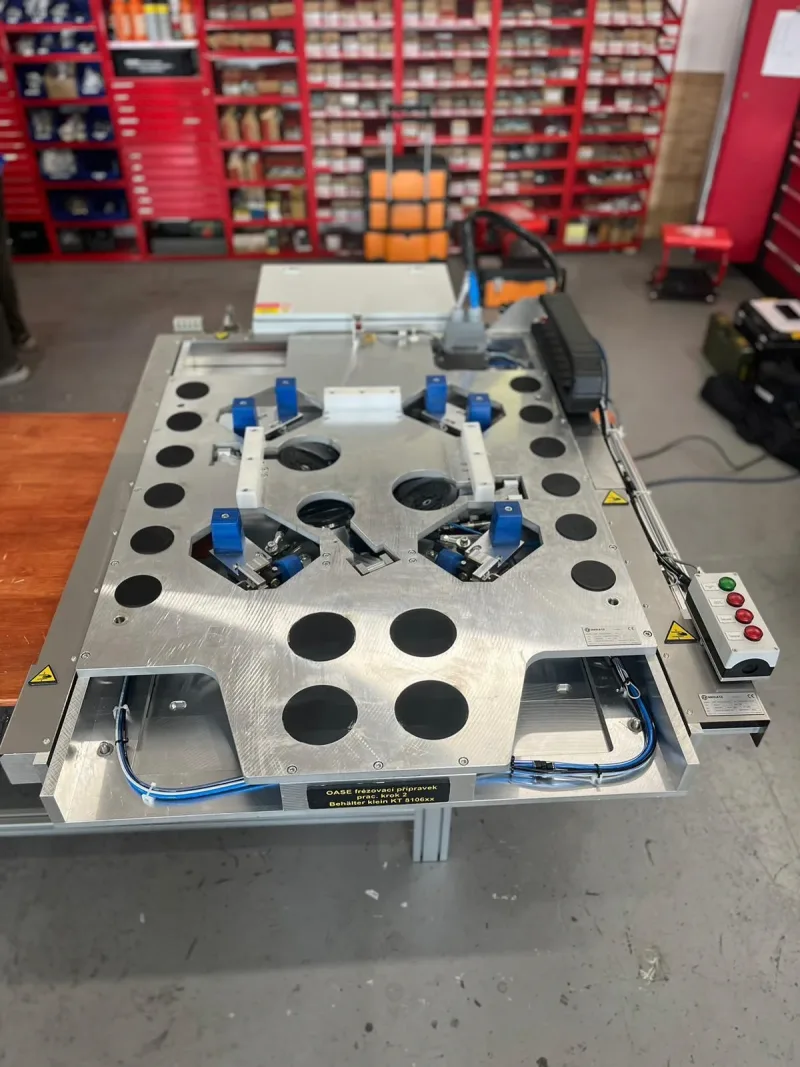
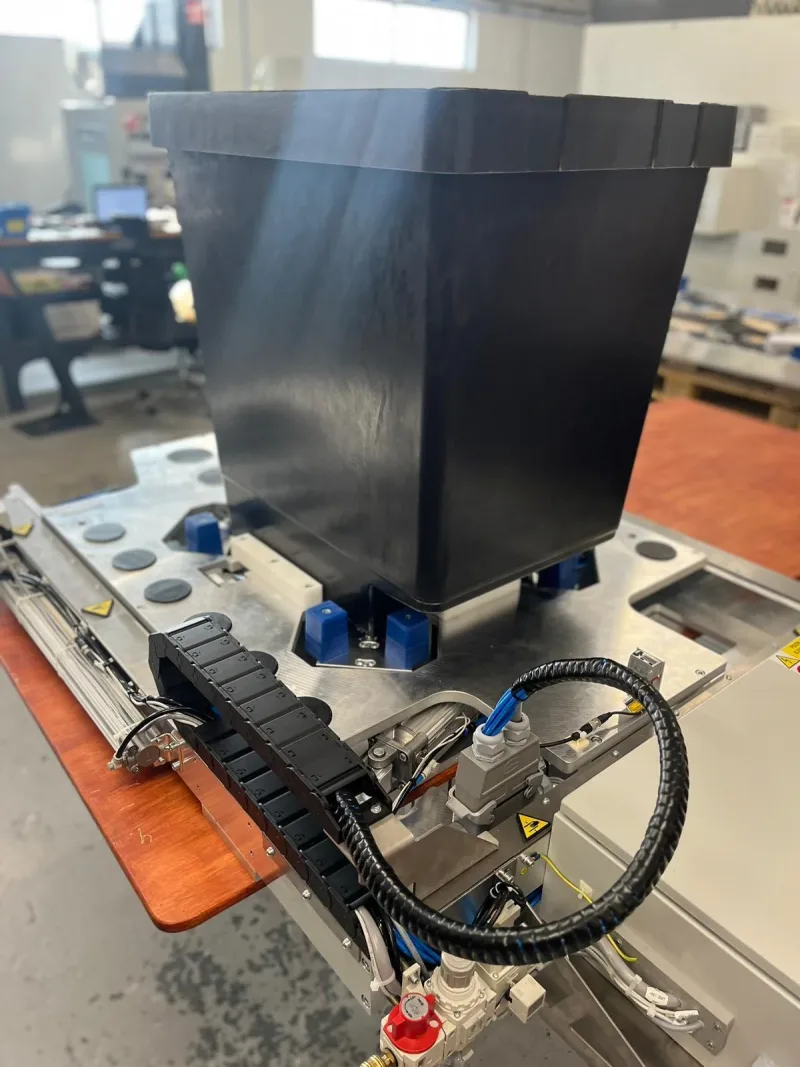
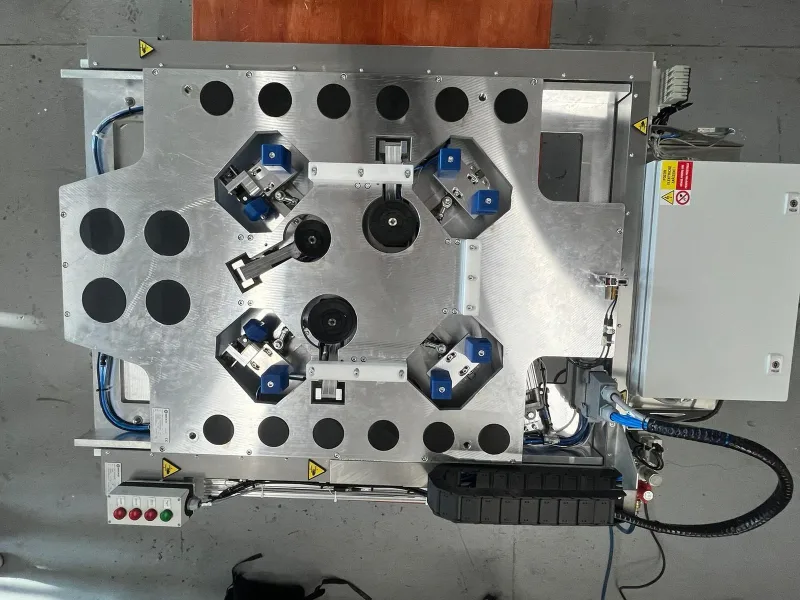
Milling clamping fixture for two product variants
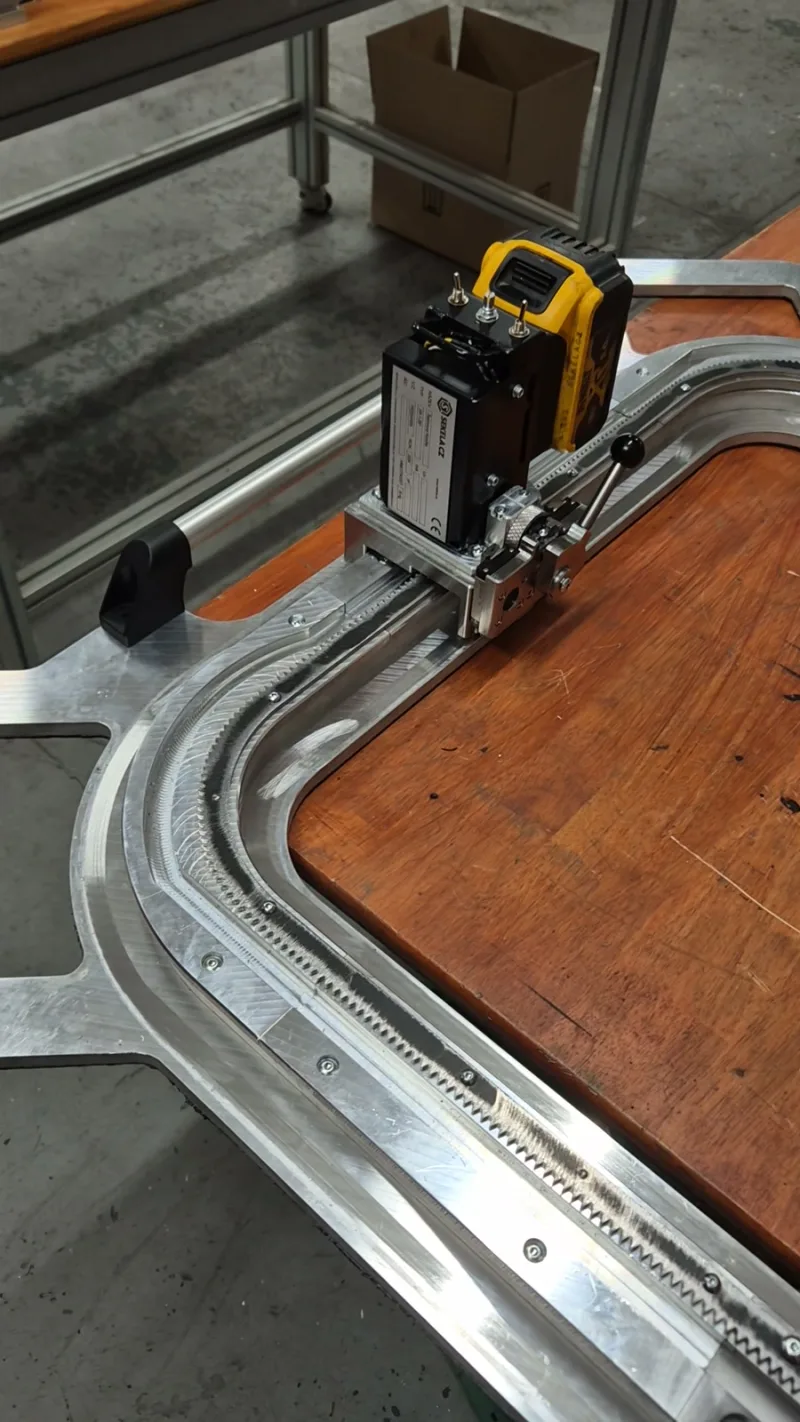
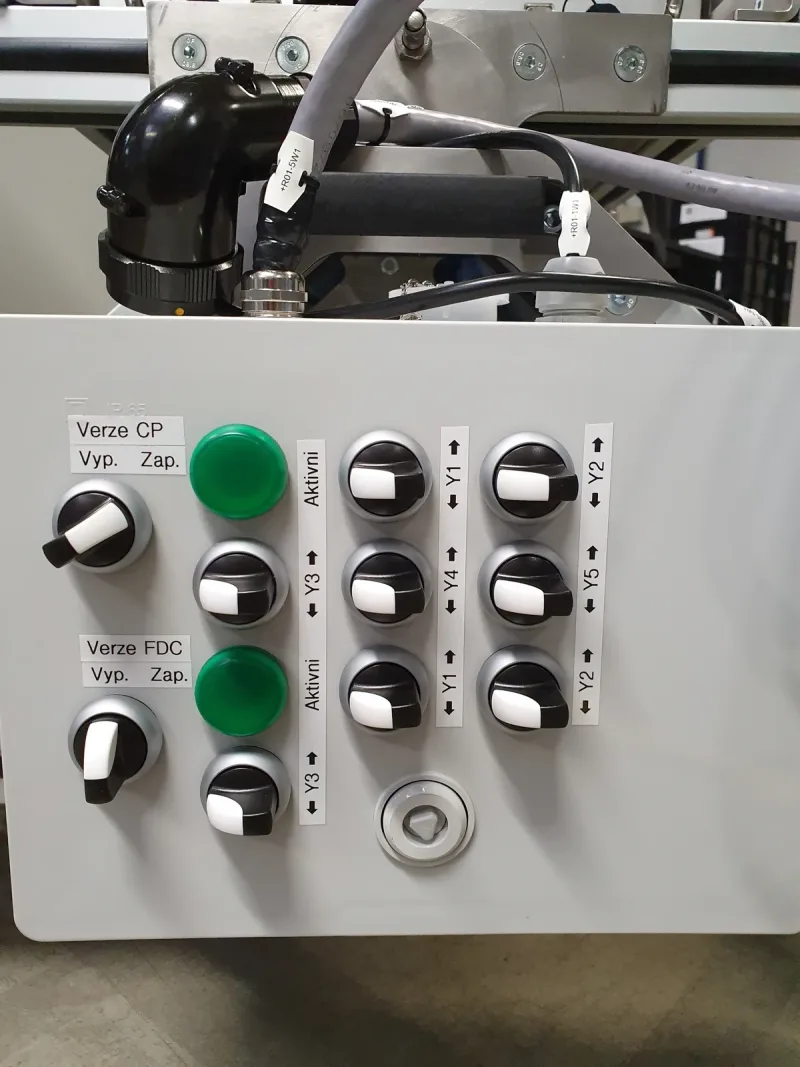
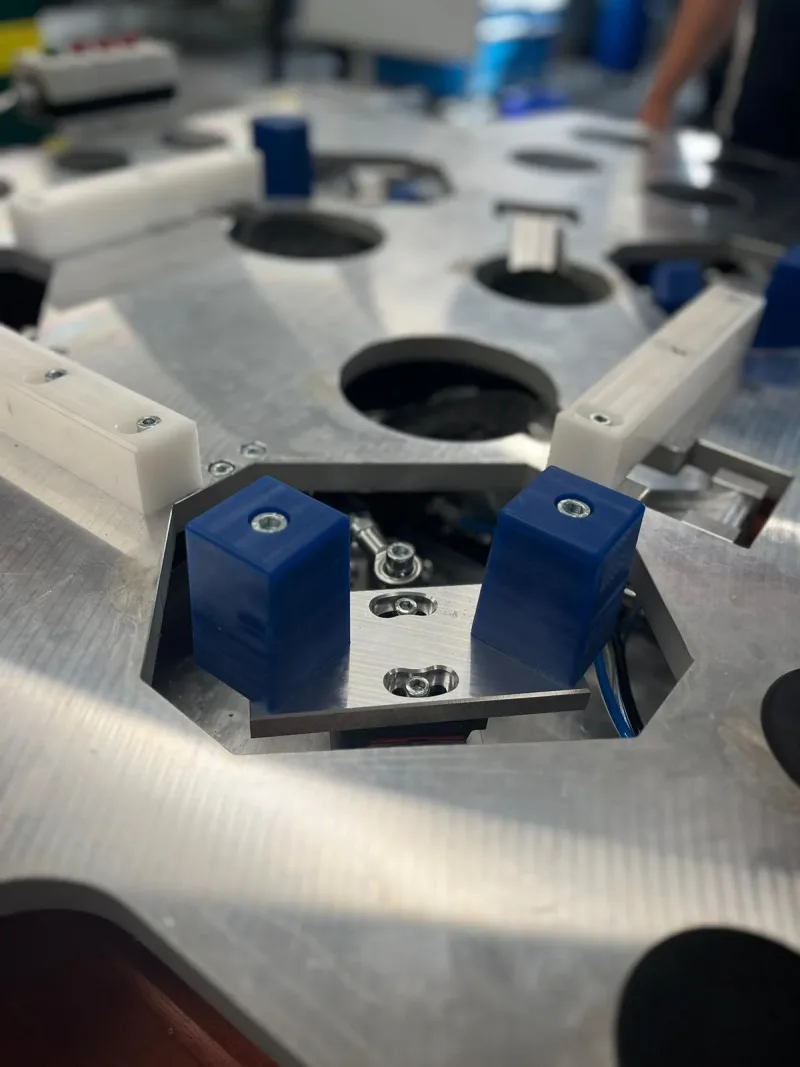
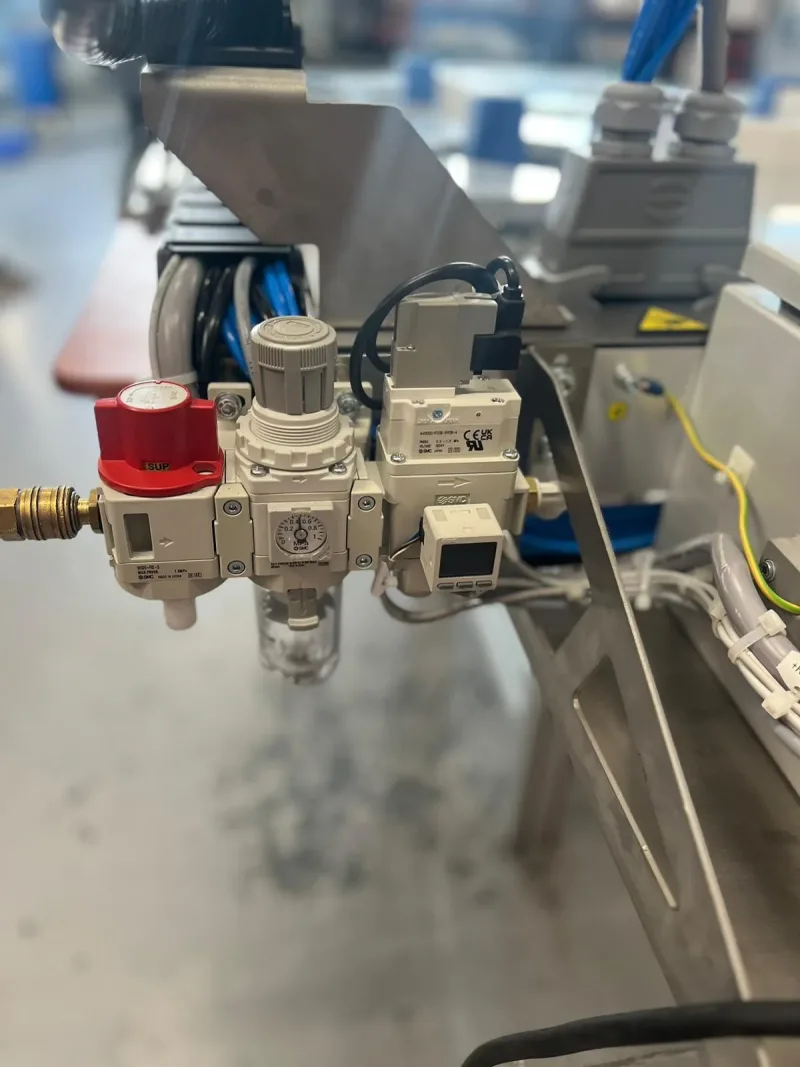
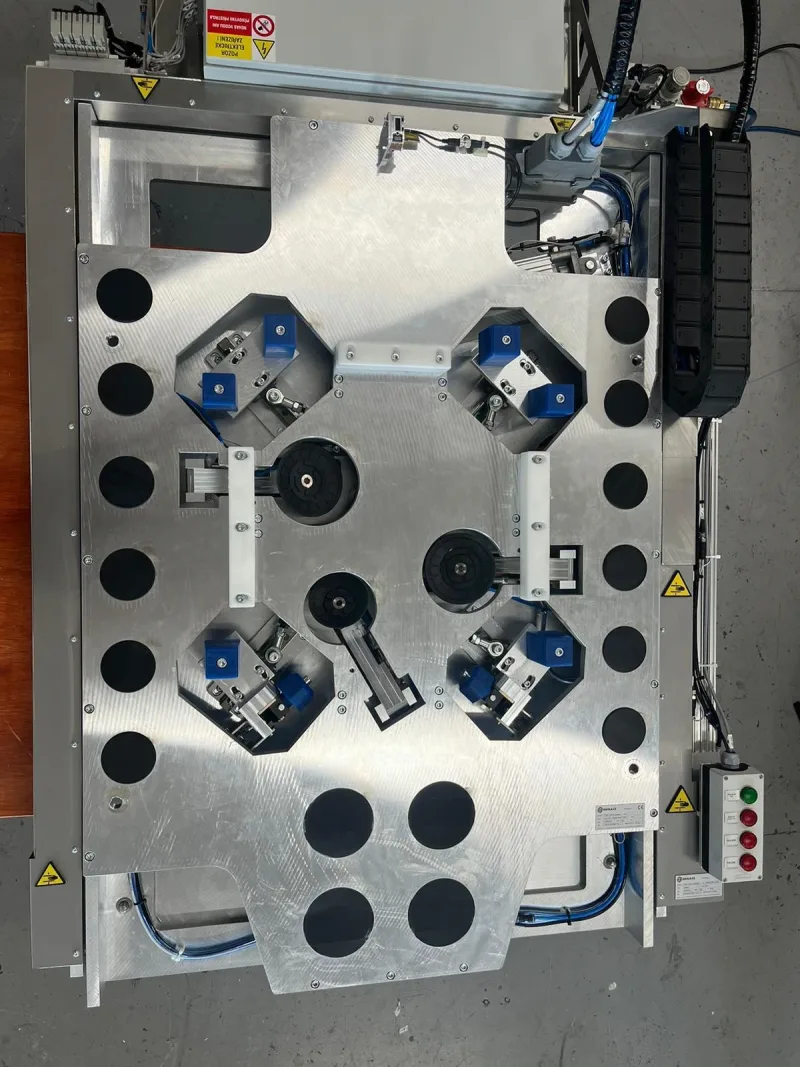
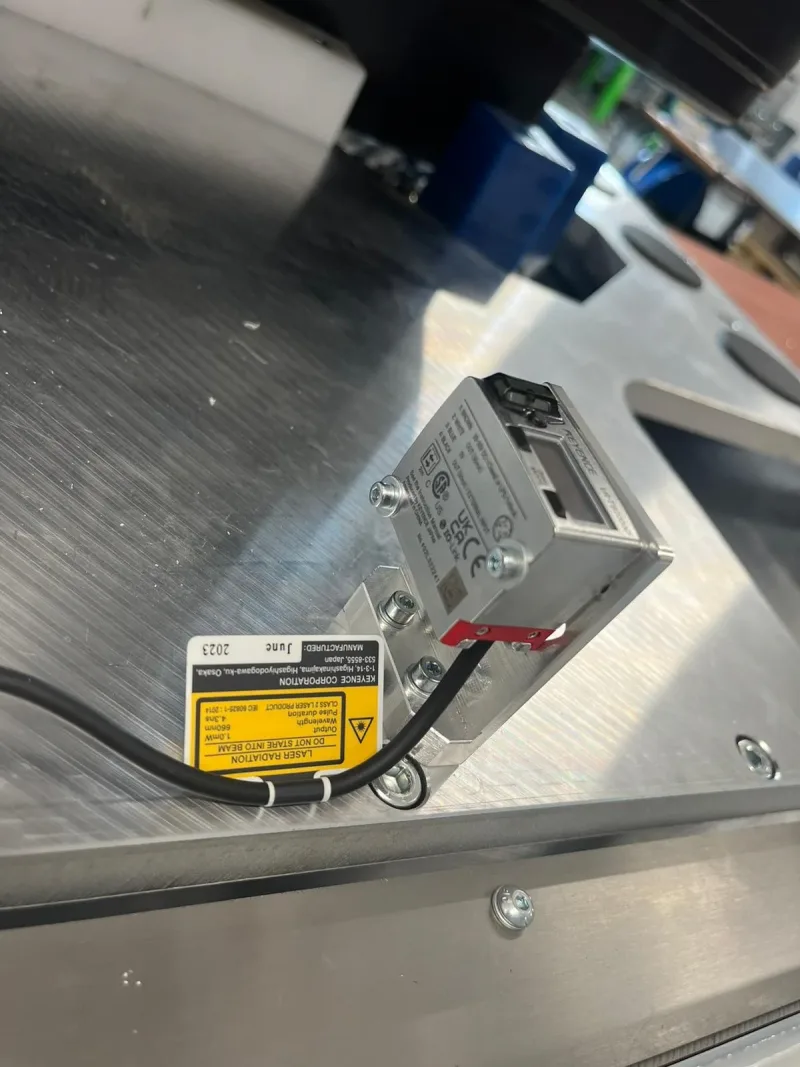
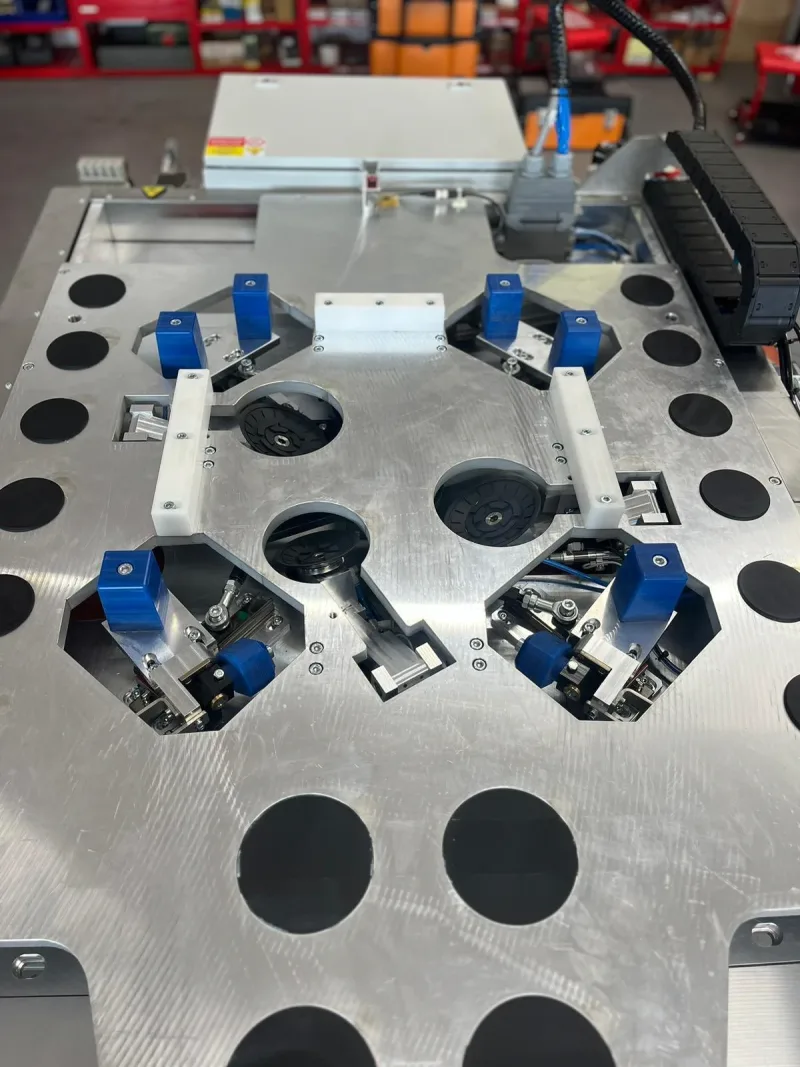
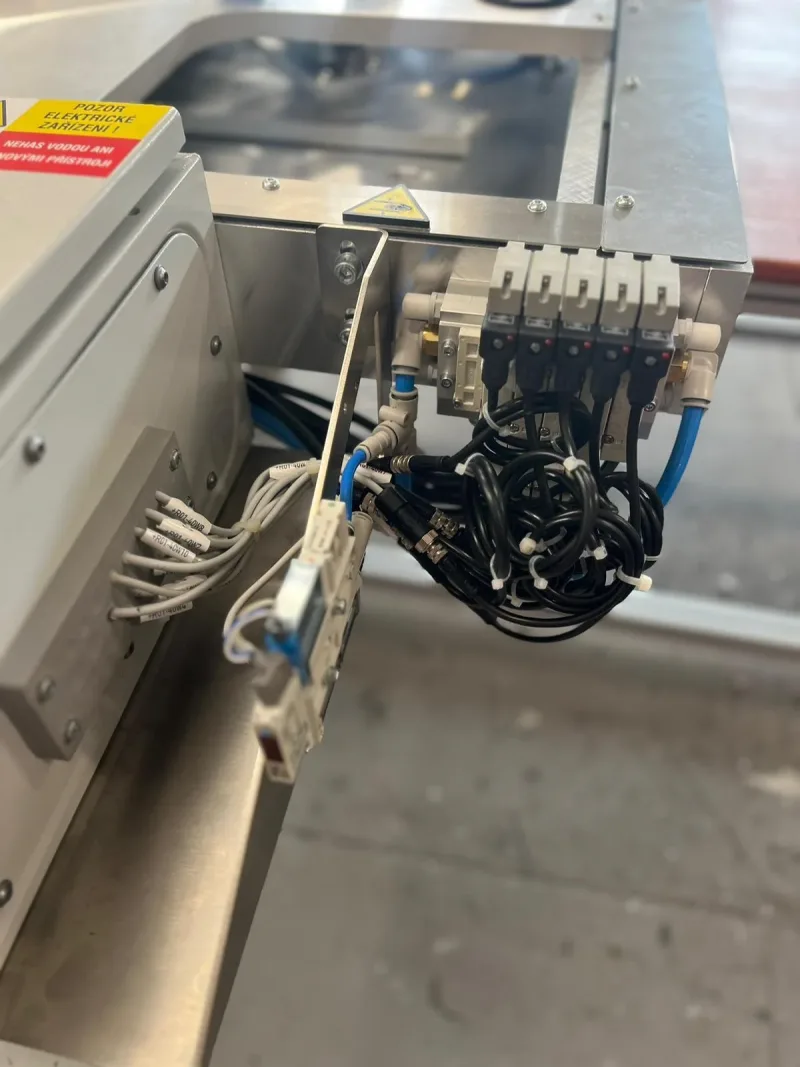
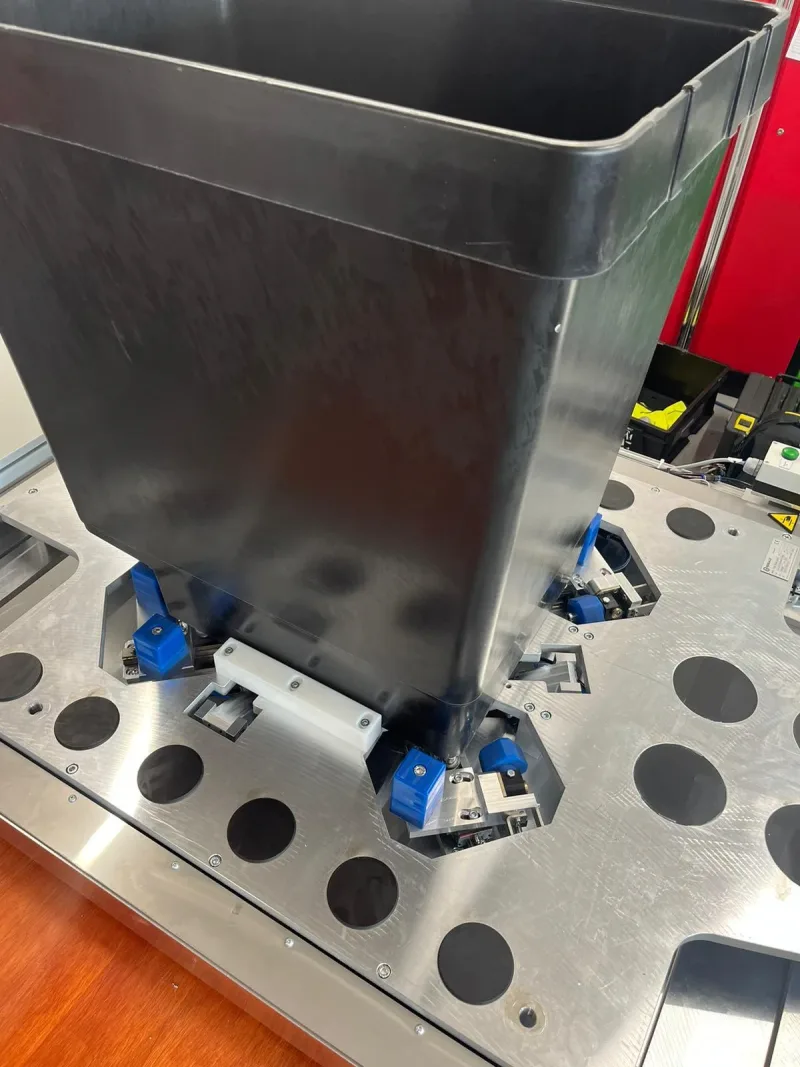
Interchangeable top plates fit onto a common base. The case study shows centring, suction cups, connection of pneumatic and control signals, and sensing of part orientation. The study covers the design at the stage before acceptance.
Documents for designing and verifying a fixture
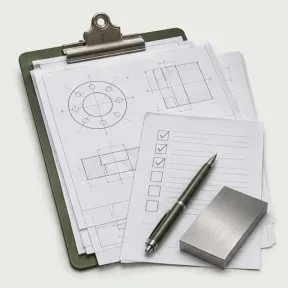
A drawing describes the geometry of the part. To design a fixture, the working method and the state to be verified also need to be added.
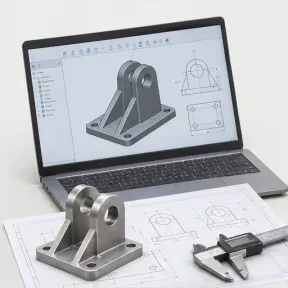
Part and contact surfaces
Prepare the current drawing revision, the model and available samples of all variants. Mark the tolerances, permitted support and clamping surfaces, sensitive surfaces and loads during the operation. This information links the shape of the part with how it is loaded.
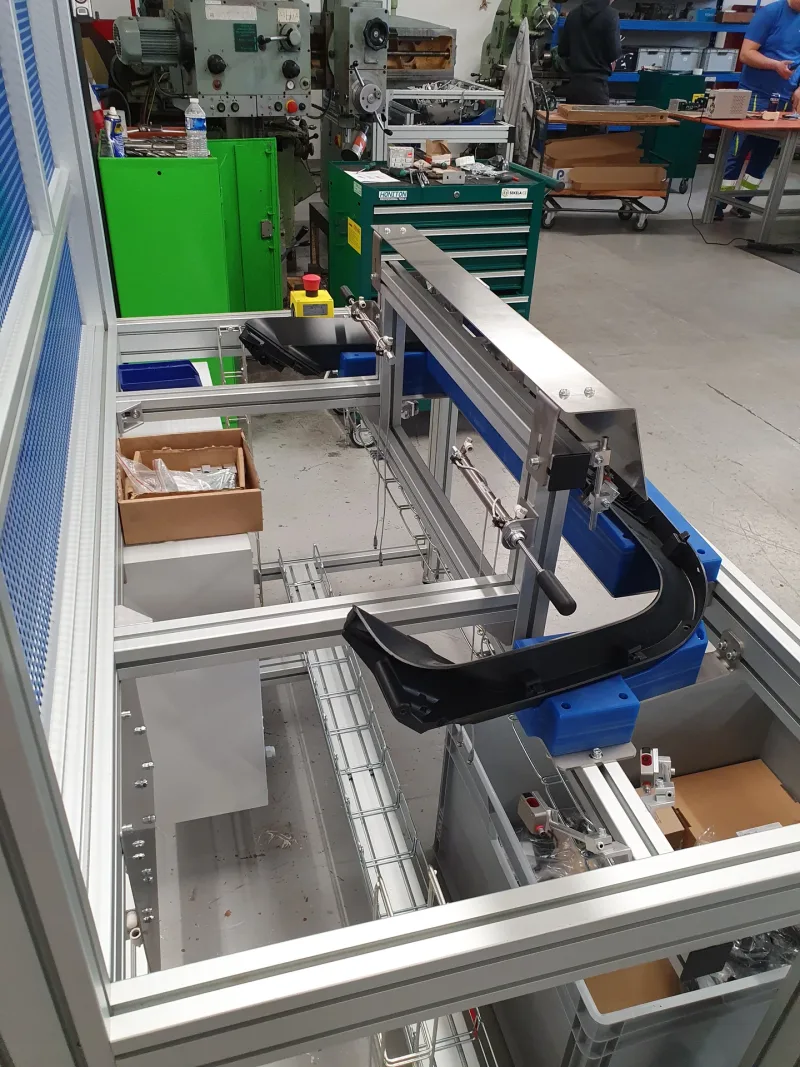
Loading and changeover
Show the part orientation, operator access and the connection to the machine or tool. For multiple variants, describe what changes and how often. Also include how the product is removed after the operation is completed.
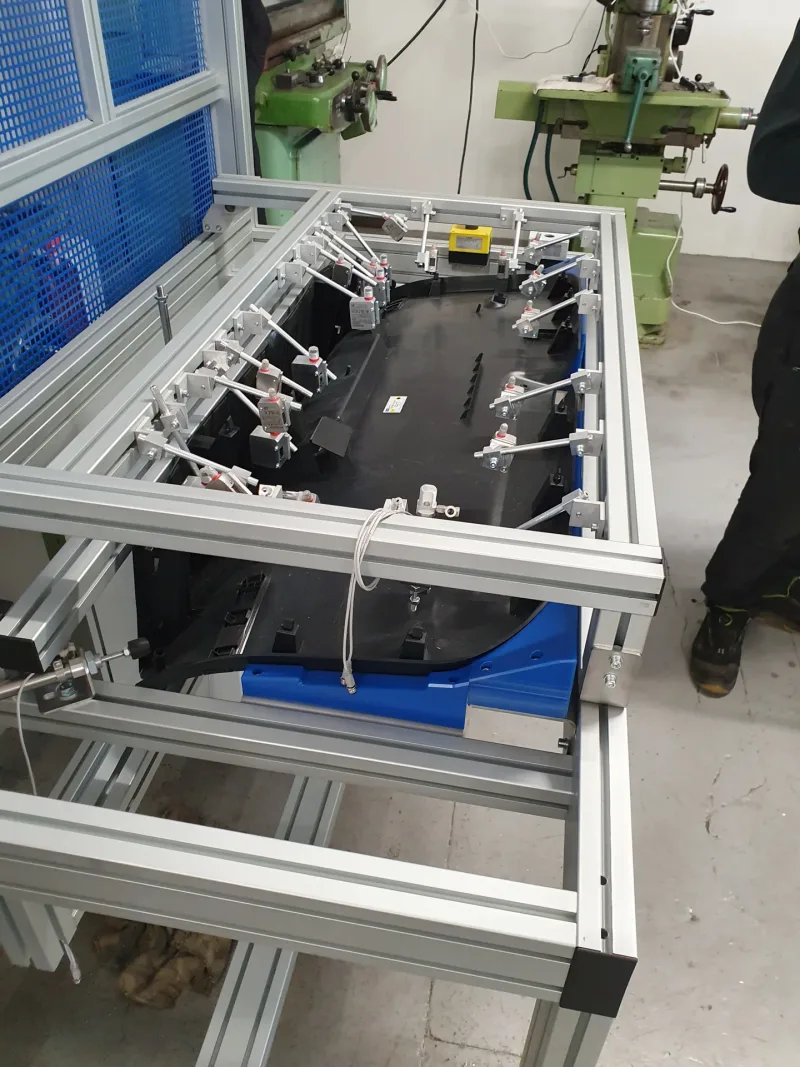
Correct state and deviations
Specify the monitored dimension or state, the permissible deviation and the inspection method. For assembly, name the possible errors and the moment when the part is released. Labelled samples with a description of the correct state as well as known nonconformities help with testing.
From part specification to fixture verification
Assessment of the operation and documents
We go through the drawing, model or sample and clarify the purpose of the fixture. We identify the critical dimensions, surfaces and differences between variants.
Design
We agree on the method of loading, clamping and operator work. We choose materials and the manufacturing design according to the required function and environment.
Manufacture and optional prototype verification
The manufacturing method is based on the approved design. Whether a prototype or a separate test of part of the solution is needed is determined by the complexity of the fixture.
Testing on the part and handover
We verify the function according to the agreed criteria and agree on any fine-tuning. The number of fixtures, the documents handed over and the required support are determined for the specific delivery.
Fixture verification relates to a specific part
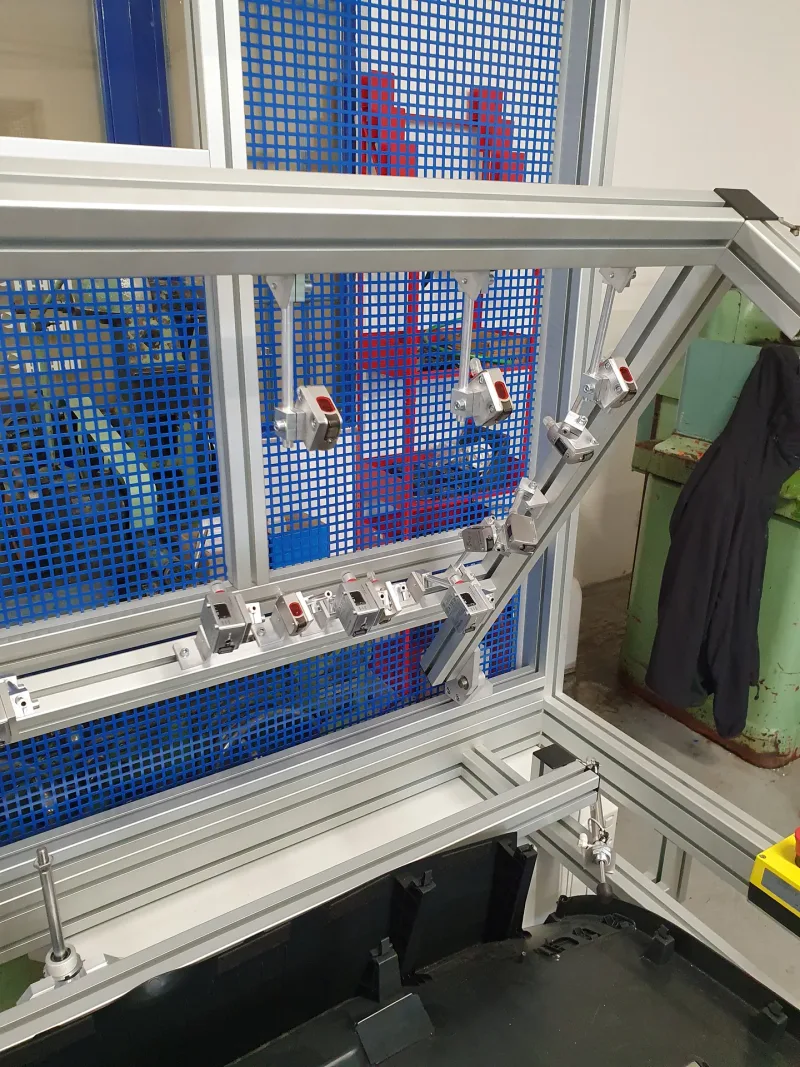
Loading and access
Testing of the agreed product variants, operator access and the connection to the tool or machine.
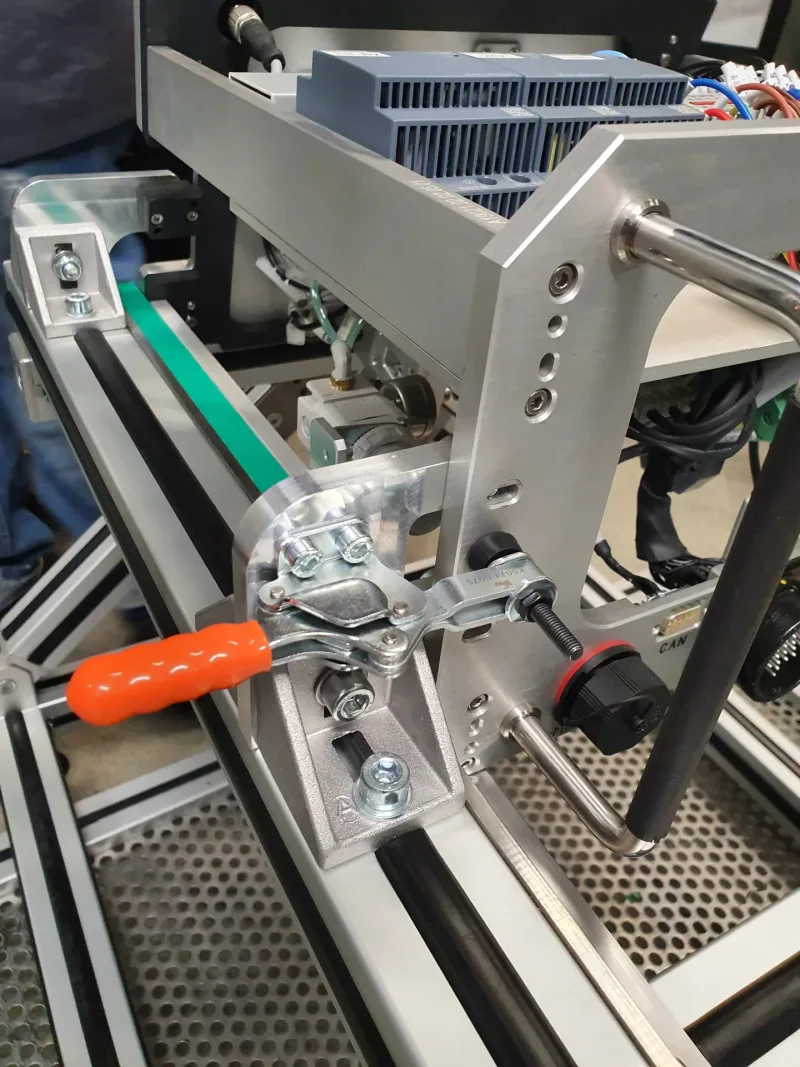
Position, clamping and inspection
Verification of the agreed functions and critical dimensions or states. The accuracy and the method of verifying it are specified in the brief.
Handover for use
Definition of settings, interchangeable parts, documentation and any training according to the delivery. Requirements for spare parts and support are agreed in advance.
Should the fixture prevent an error or detect it?
Two examples from our projects show different ways of working with the operator.
When fitting M12 connectors, the fixture guides the operator by selecting the wire and making the relevant positions accessible. The fixture for inspecting locking elements, on the other hand, verifies the fitting and keeps the part clamped if there is an error.
For your own brief, specify the moment at which the workstation should intervene and the required corrective procedure. This determines the necessary assembly guidance, inspection and response of the fixture.
Questions about the part, variants and verification
What is needed to design a fixture?
A sample, drawing or 3D model of the part and a description of how the part is to be loaded, clamped or inspected.
Is it enough to send a model, or do you need an actual part?
State whether a drawing with the current revision, a model and samples are available. For the design, we also need to know the tolerances, sensitive surfaces and differences between variants; we specify the required documents according to the operation.
Can one fixture handle several variants?
We assess this according to the geometry of the parts, the operation and the changeover frequency. Include all variants the fixture is to cover.
How do we specify an accuracy requirement?
Mark the critical dimension or position, the permissible deviation and the verification method. The requirement needs to relate to the specific part and operation.
How do we specify error prevention during assembly (poka-yoke)?
State which error the fixture should prevent: mixing up parts, skipping an assembly step or incorrect loading. In M12 connector assembly, magazines are unlocked and positions that do not apply are covered according to the procedure. For your brief, we agree on the errors to be monitored, the moment when the part is released and the operator procedure after a nonconformity is detected.
Can a part be marked only after a successful inspection?
On the fixture for inspecting locking elements, a correctly assembled part was marked with a needle. State the requirement for marking the part, its location and the link to the inspection result in the brief.
How do we prepare samples for verifying an inspection fixture?
Mark the variant and revision of the part and describe which properties the fixture is to verify. If you have samples with a known nonconformity, keep them separate and state the specific defect for each. We agree on the selection of samples and the test procedure according to the required function of the fixture.
Precision and quality
Every fixture is designed with the utmost care for the highest possible precision.
Individual approach
We tailor every solution to the specifics of your production process.
Increased efficiency
Minimised errors and shorter production cycles.
Durability and reliability
We use high-quality materials for a long service life and reliable operation.
Compatibility with automation
We design fixtures so that they can be easily integrated into robotic and automated systems.
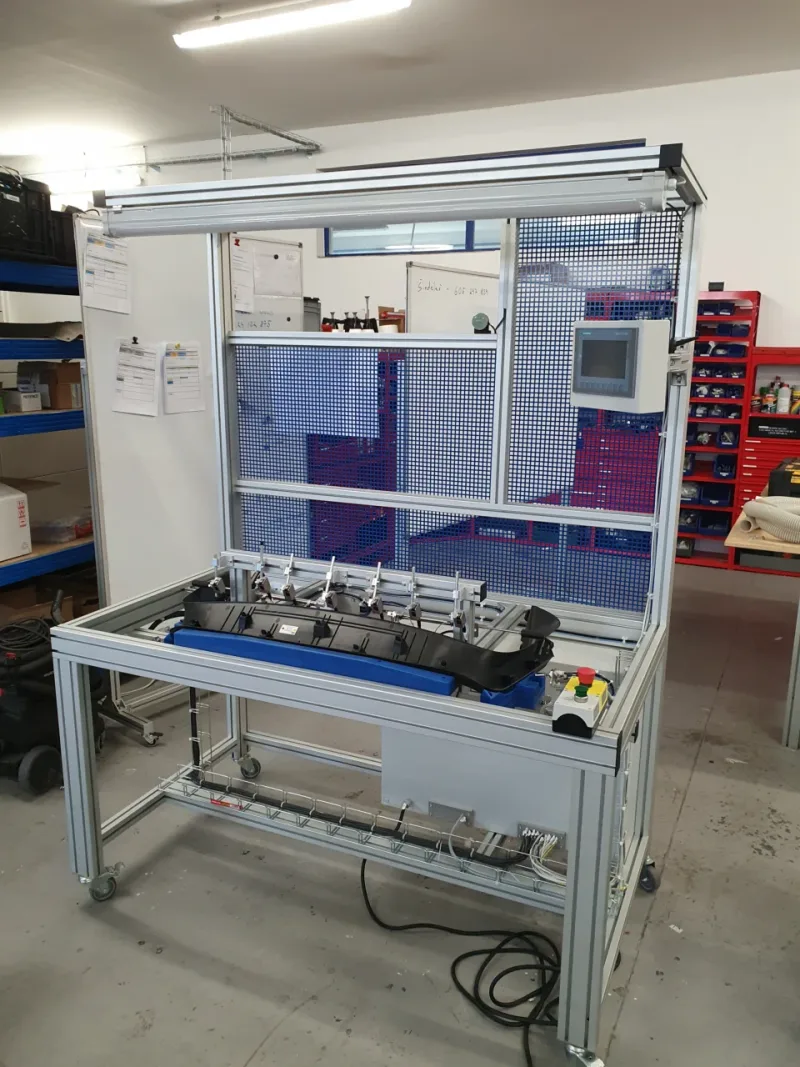
Fixtures are an essential part of industrial production. They ensure precise clamping, positioning and handling of products, leading to greater efficiency, precision and safety in the production process. We design custom fixtures that perfectly match the specific requirements of your production.
Types of production fixtures we offer
- Clamping and positioning fixtures - For precise holding of parts during assembly or machining.
- Welding fixtures - Ensure repeatable and precise positions of welded parts.
- Assembly and inspection fixtures - Make manual assembly or product quality inspection easier.
- Handling fixtures - Optimise the transfer and handling of products in the production process.
- Special custom fixtures - We design solutions according to the customer's specific requirements.
Materials and technologies we work with
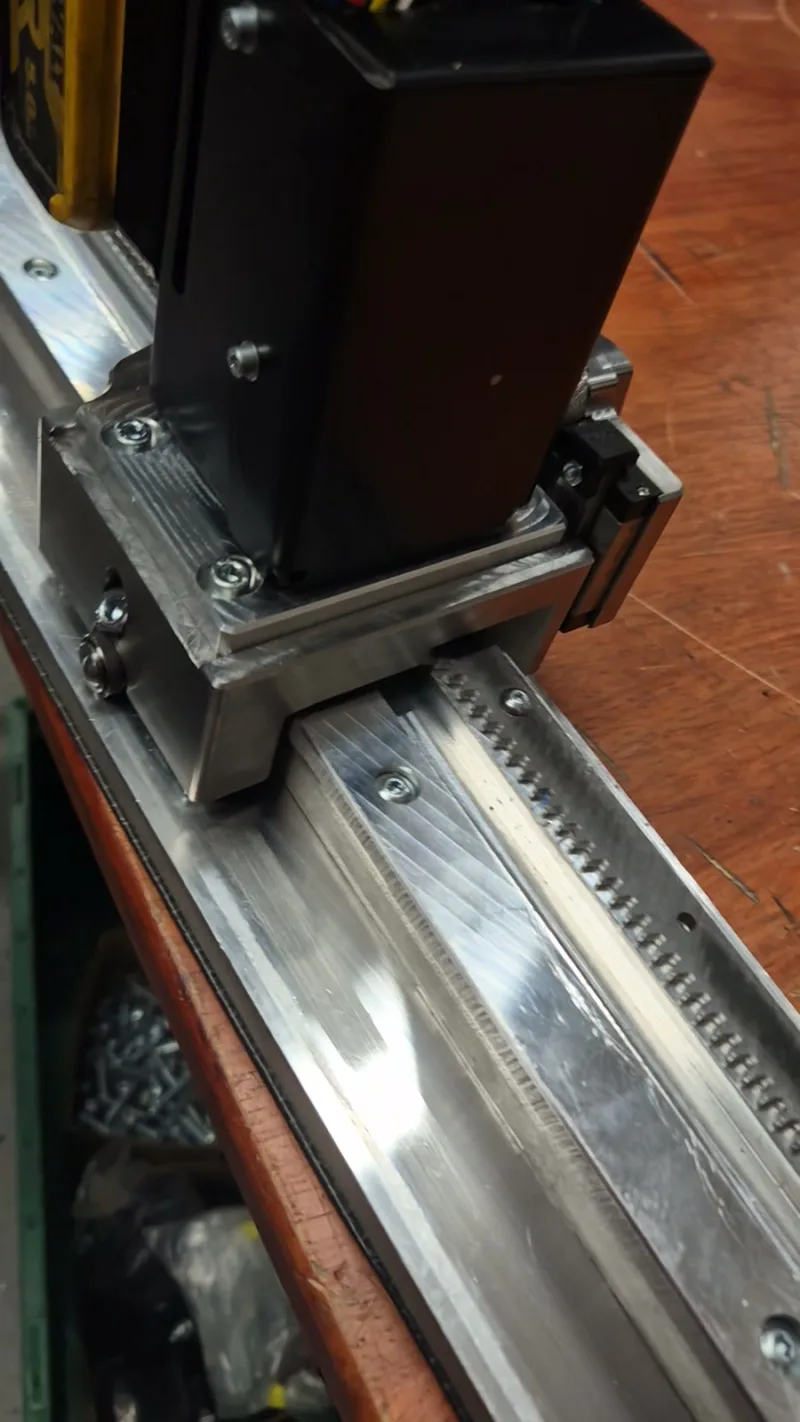
We manufacture fixtures from various materials - steel, aluminium, plastic, composite materials, according to the requirements of the specific application.
We use state-of-the-art manufacturing technologies:
- CNC machining - Precision manufacture of metal and plastic parts.
- 3D printing - For rapid prototyping and the production of special components.
- Laser cutting and sheet metal bending - For precise and durable structural elements.
- Welding and assembly technologies - For strong and reliable joining of components.
How would you like to contact us?
Contact us directly
+420 778 080 606 sekela@sekela.cz
Continue via the enquiry form
Describe what you need. You can attach supporting documents.